When the governor of Washington state launched the Keep Washington Green association in May 1940, he probably didn’t expect his movement to spread across the country. He most certainly wasn’t thinking about the legacy it would leave the world of license plates.
Human-caused forest fires were an increasing problem, with much of that growth attributed to public carelessness with burning objects. Specifically, burning cigarettes, which thanks to growing highway traffic were more frequently introduced to bone-dry wilderness.
By the mid-1940s, more than 40% of adults in the United State smoked cigarettes, and while it took many more decades for people to realize that inhaling poison into your lungs multiple times a day might not be a good idea, the more immediate downside of flicking still-smoldering butts into dry roadside grass was brought to the public’s attention through the Keep Green movement’s constant reminders to USE YOUR ASHRAY.
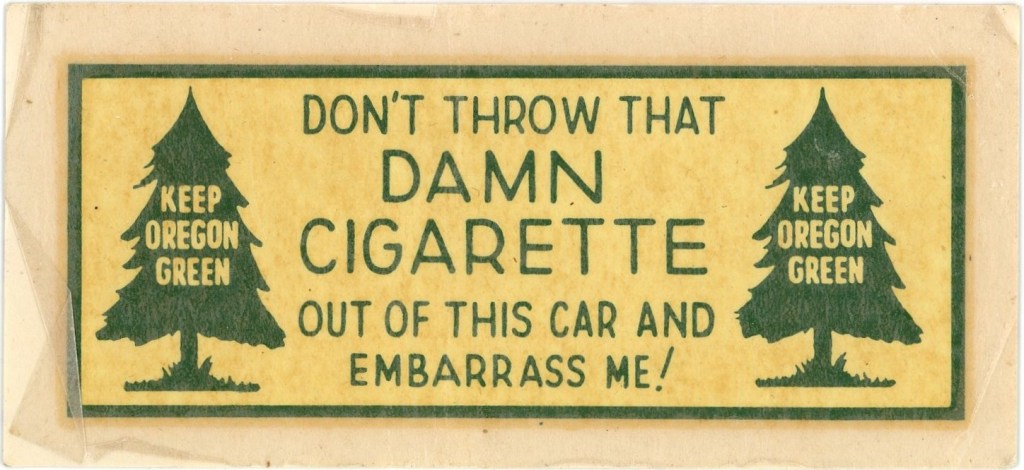
The money-producing forests of the Pacific Northwest posed the greatest risk for public catastrophes, but after World War II, the “Keep Green” movement spread like wildfire crazy, with more and more states forming their own associations to educate the masses on the importance of safety and conservation.
Throughout the 1940s and 1950s, the Keep Green movements relied heavily on car-based messaging, mainly license plate toppers, as a way to spread the message and remind drivers to keep their ashes away from nature.
Keep Oregon Green License Plate Toppers
The Keep Oregon Green association was founded a year after its northern neighbor, in April 1941. The state had endured the devastating Tillamook Burns in recent years, and the inevitability of U.S. entry into World War II highlighted the state’s vulnerability.
“Oregonians realize that forest defense is national defense since lumber and lumber products play an important role in the armament program,” Edmund Haynes, Chairman of the Keep Oregon Green association, told The Oregonian on June 30, 1941. “The fact that more than 600 forest fires in Oregon last year were caused by smokers’ carelessness is a challenge to every thinking citizen.”
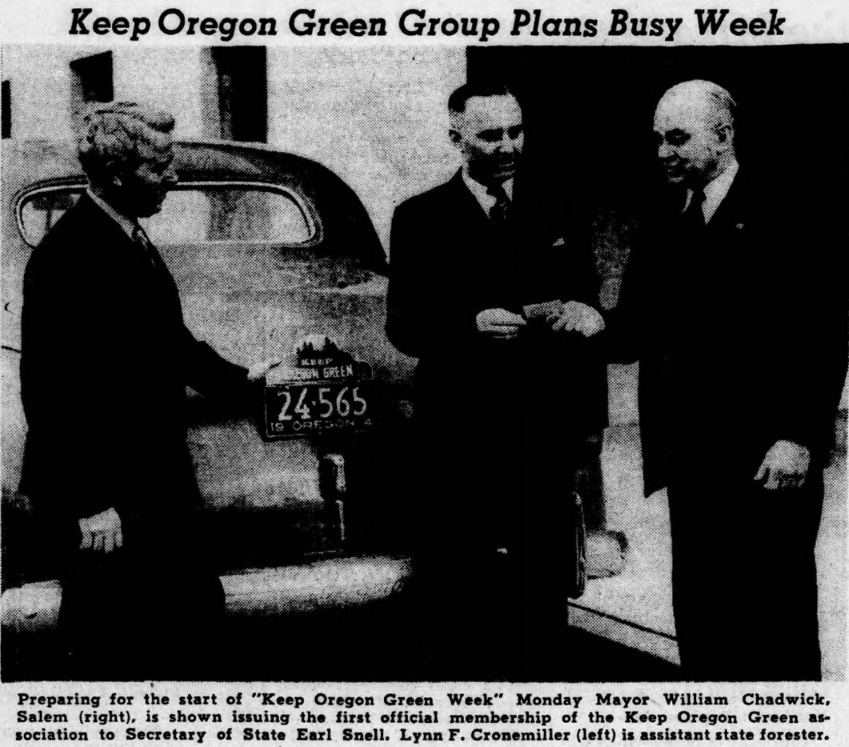
Oregon wasted no time spreading the word. By the summer of 1941, “Keep Oregon Green” license plate toppers became a common sight on the roads.
These early examples were manufactured by the Irwin-Hodson company of Portland, the same firm that had been making Oregon’s license plates for decades (and would continue to for decades more).
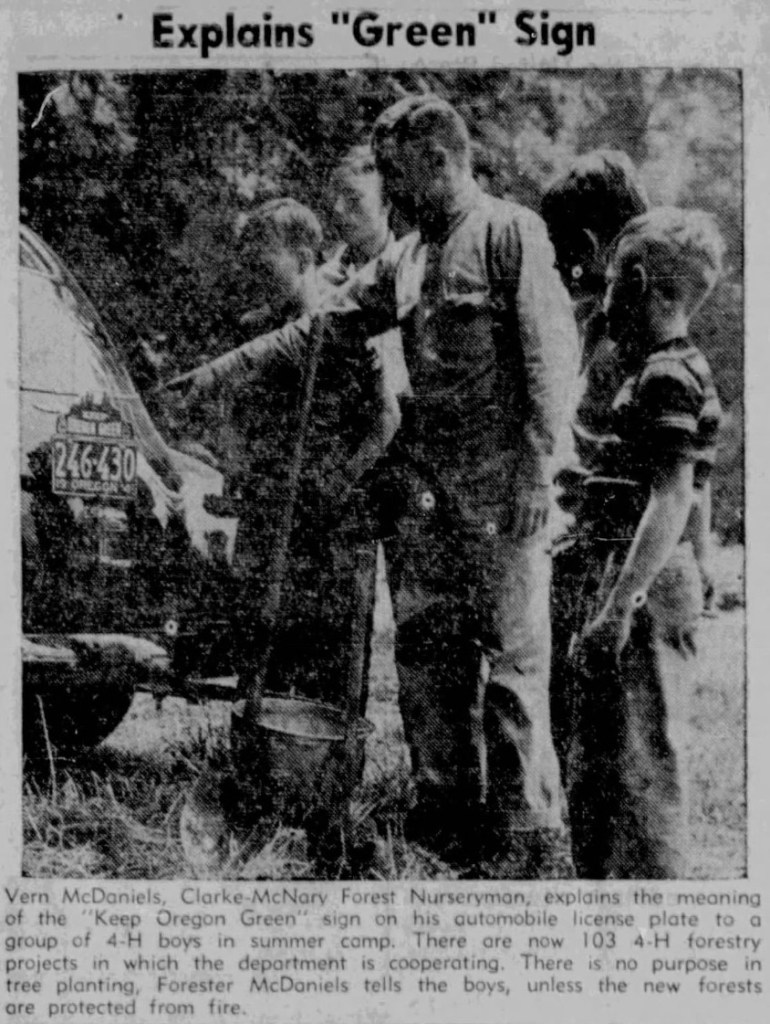
Metal use for civilian purposes was severely curtailed not long after Keep Oregon Green’s birth. During the War years, an adapted “Keep Oregon Green” topper made of plywood (by unknown manufacturers) was used for advertising.
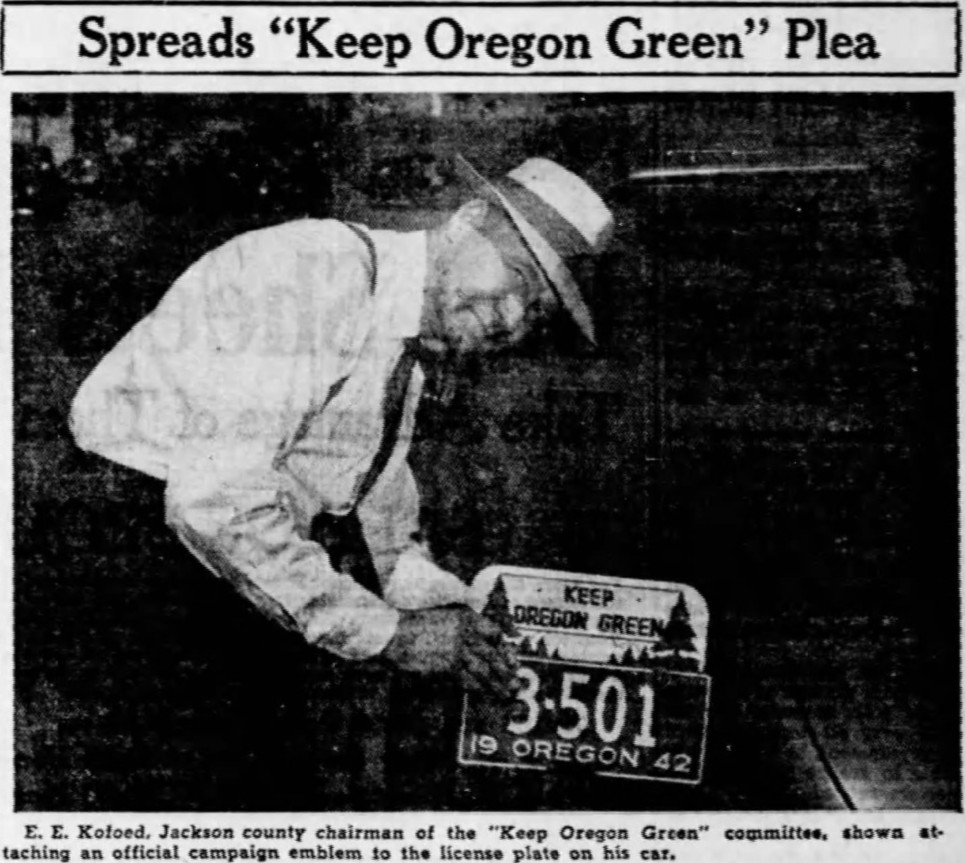
After the war, yet another design was used, with bold lettering and a lush forest surrounding Mt. Hood.
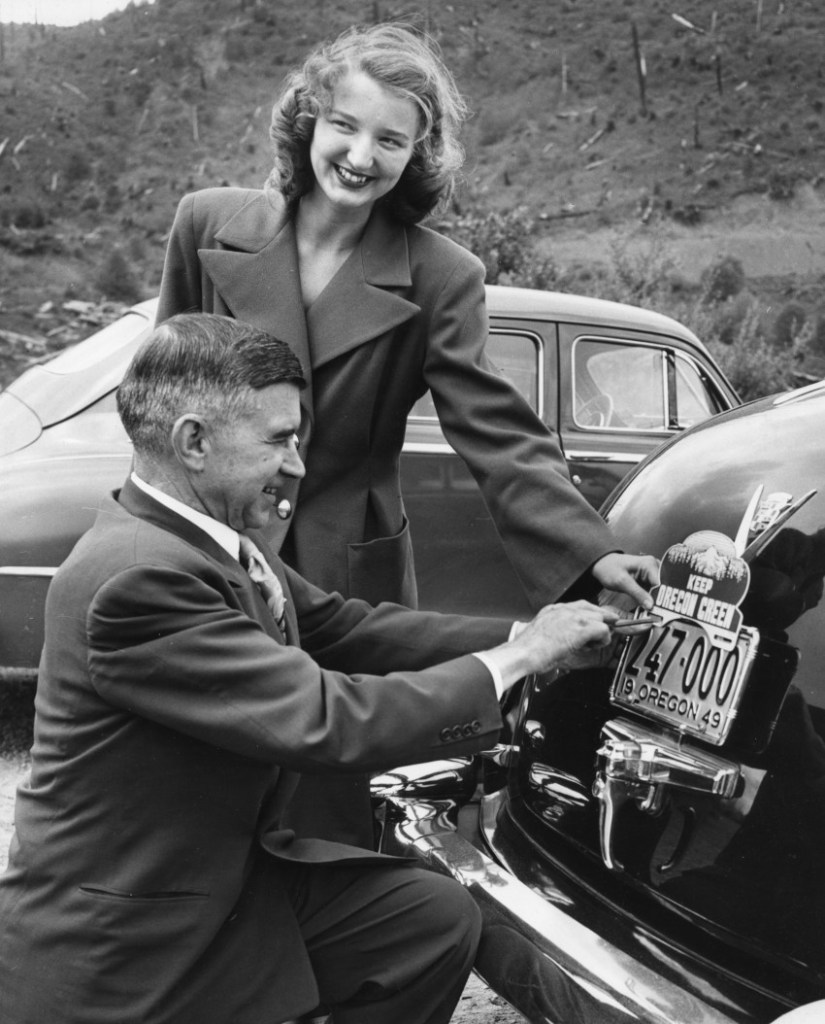
Keep Oregon Green offered a variety of license plate topper styles in a relatively short period, but would eventually adopt a somewhat standard design used across the United States, thanks to a Minnesota company that would grow into a prolific supplier of Keep Green movements.
Spreading Movement: Keep Green License Plate Toppers Everywhere
The dense forests of the Pacific Northwest weren’t the only places at risk of wildfire, and other states soon joined Washington and Oregon in advocating for fire safety. In 1944, Minnesota started its own “Keep Green” movement, and was joined the following year by Indiana, Montana, Virginia, Mississippi, Maine, New Hampshire, Vermont, Massachusetts, Connecticut, and Rhode Island.
The last holdout in the Pacific Northwest, Idaho, launched its own Keep Green program in 1946, along with Missouri, Florida, North Carolina, and Arkansas; the following year, the Keep Green roster grew to include West Virginia, California, Utah, Texas, and Georgia.
With that many Keep Green associations around the country, common advertising methods developed, and license plate toppers were a core element.
Up where it all started in the Evergreen State, Keep Washington Green finally launched its own license plate topper in 1947, a long and flat shape that was quite unlike what was used elsewhere. These were used through approximately 1952, and the design was closely tied into the Keep Washington Green Association’s branding and signage.
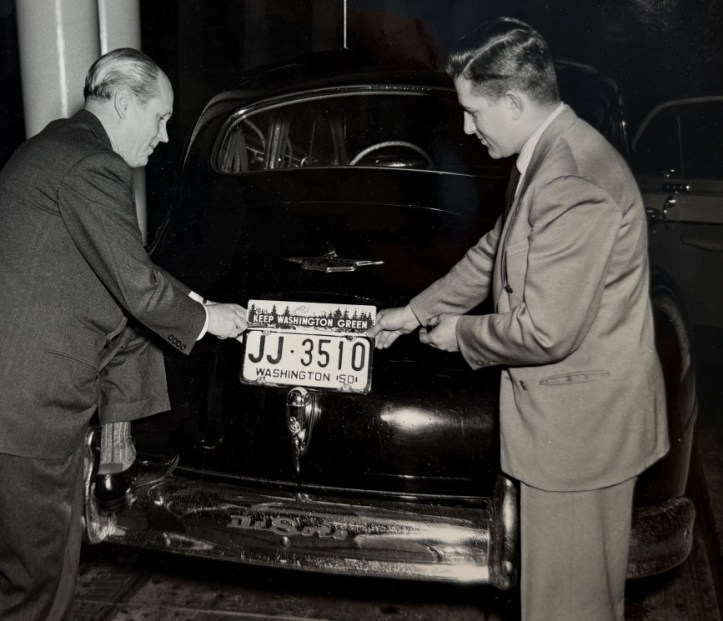
Around the same time the Keep Washington Green topper debuted, Idaho joined its western neighbor in selling its own special Keep Idaho Green license plate topper.
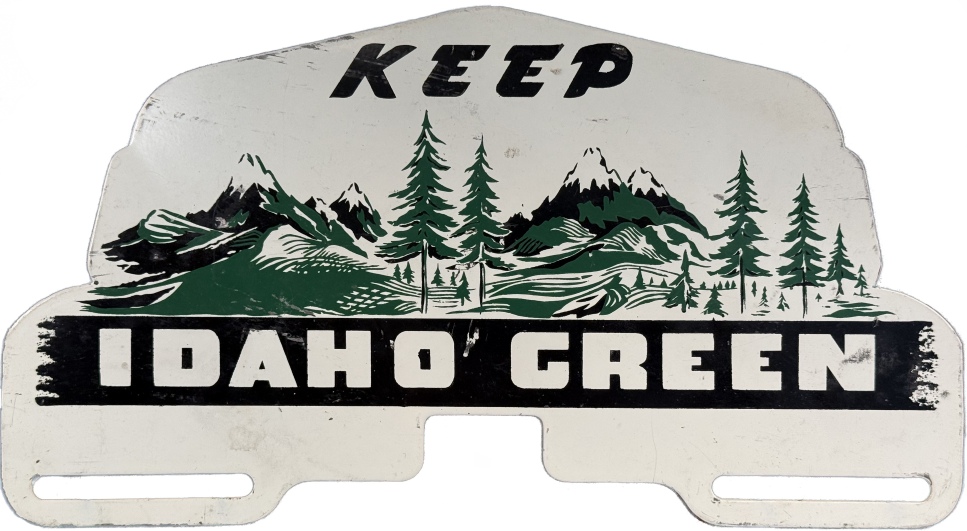
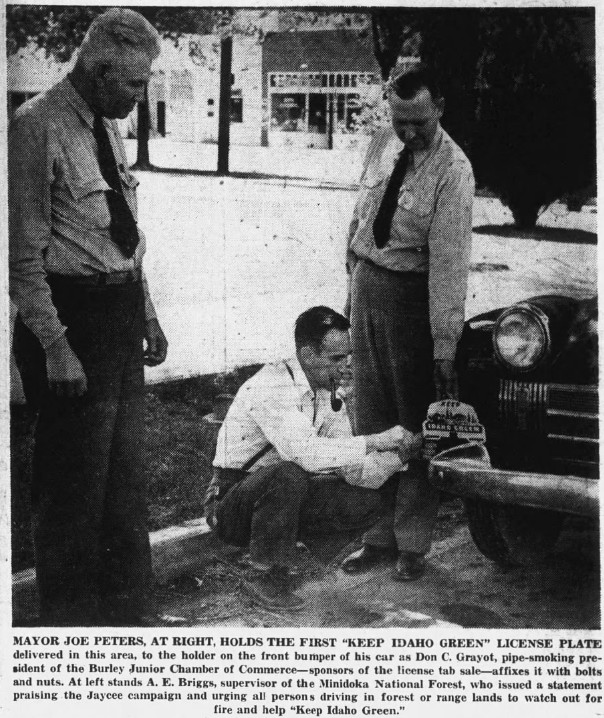
As 1947 drew to a close, Pacific Northwest roads carried an abundance of forest safety messages, with Keep Oregon Green, Keep Washington Green, and Keep Idaho Green toppers riding the highways.
In Minnesota, a new topper design would soon emerge that would spread all over the country.
License Plate Toppers from the A.L. Lind Company
Probably no other business hitched its fortunes to the Keep Green movement more than the Alfred L. Lind Company of Minneapolis.
The company’s signature product was a “living fire display.” This cardboard stand-up display used lights and colored cellophane to simulate a burning forest, to a striking effect. It sold its product to Keep Green associations across the country.
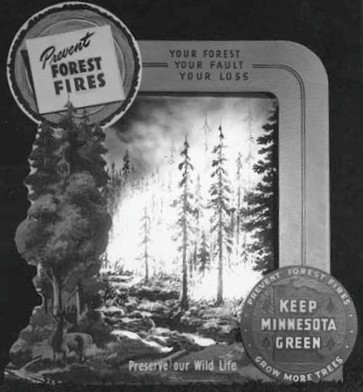
Smoke and flames appear to billow from the woods in this 19-inch-tall animated forest fire prevention display. A.L. Lind Co., 5036 Thomas Ave. South, Minneapolis, plans a re-issue of the lighted displays, furnished with individual state Keep Green seals, if the firm receives sufficient orders. The price will be $14 (Forest History Society
A.L. Lind also offered a plethora of other fire-prevention advertising, customized with the names of each state. Signs, buttons, posters, and placards were all among the company’s offerings.
But license plate toppers might be the firm’s most enduring products. The same general design was used, with slight modifications, by Keep Green associations across the country.
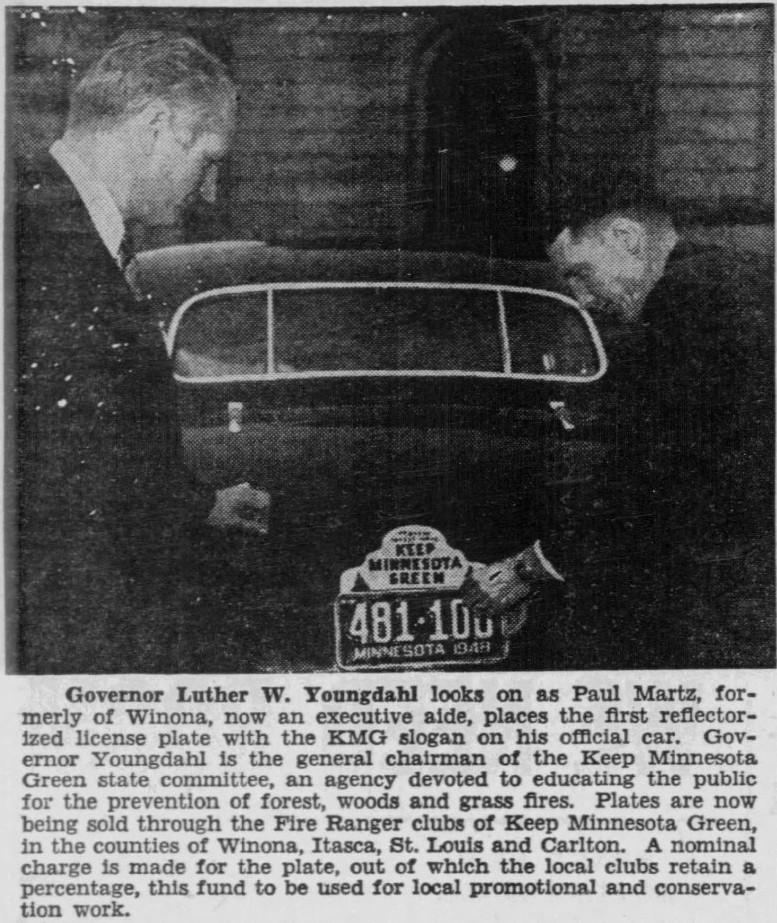
One early style was made for at least one state, Minnesota, in the late 1940s and, though larger and taller than later versions, introduced the central design theme that would persist: “Prevent Forest Fires, Keep <state name> Green,” with red text in the middle and green trees flanking each side.
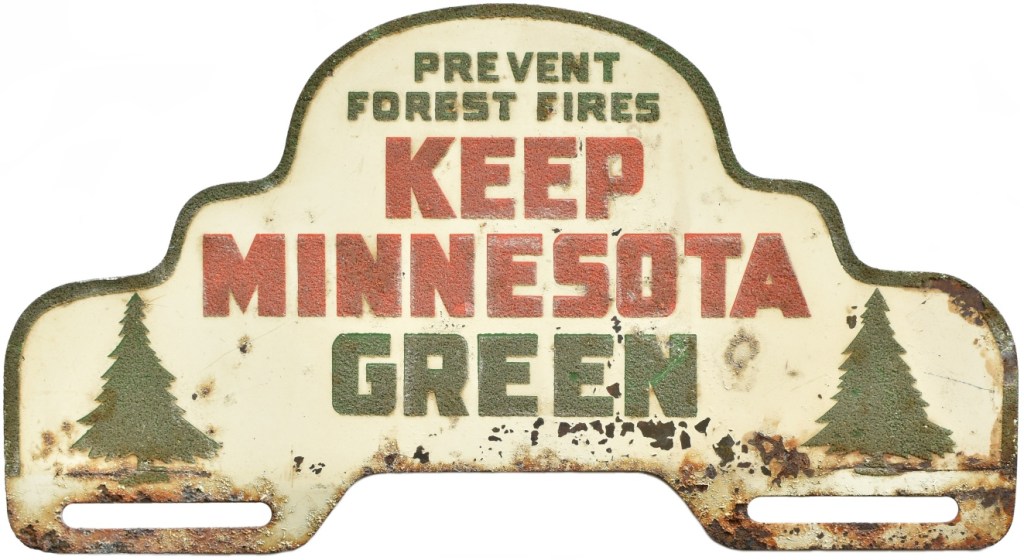
By the late 1940s, the Lind company evolved this design into a more compact shape, and customized it slightly for Keep Green movements across many states. Its “Travelling Billboards” sold well into the 1950s.
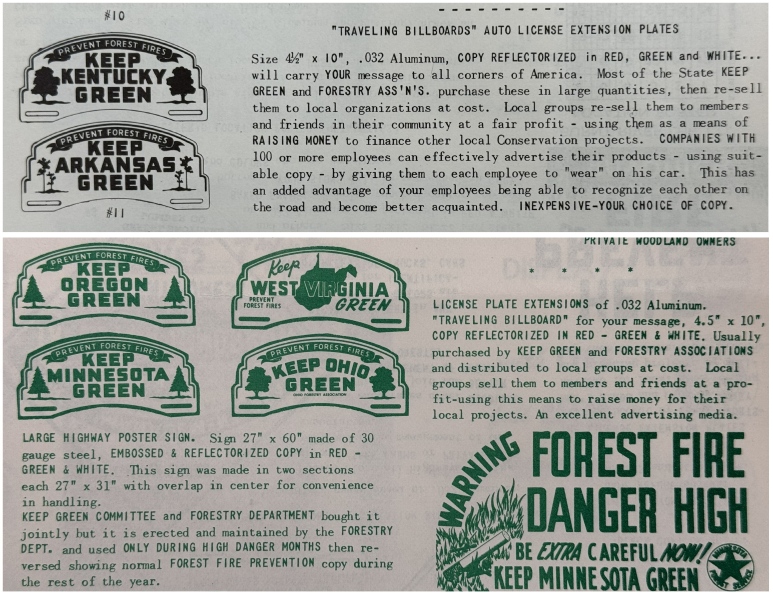
A promotional letter and catalog sent to the Keep Oregon Green Association in January 1954 commented on the toppers (or extensions, as the Lind company called them):
We recommend using as much RED AREA as possible, as this adds the DOUBLE VALUE of a RED, DANGER WARNING LIGHT that may save lives as well.
We have made the conventional metal LICENSE PLATE EXTENSIONS for most of the “KEEP GREEN” State Associations. Here is the way many of them have effected wide distribution:
The central organization will buy a good quantity – paying the price quoted. Then they will send a SAMPLE, with an order blank, to each of their COUNTY or LOCAL Associations and offer them any quantity – in units of 100 as they will come to you in bundles of 100 each – at a price of $.05 or $0.10 over your quantity price. This “extra” takes care of your SAMPLES and cost of promotion. Then the Local Committees will sell them to their members and the general public at…say $1.00, per strip. They in turn will use their “profit” for their local “KEEP GREEN” and other conservation projects. Everyone is proud to buy and wear the bumper strip on their cars as evidence of their support of a worthy cause that will also benefit their local community. The local newspapers will give it good publicity.
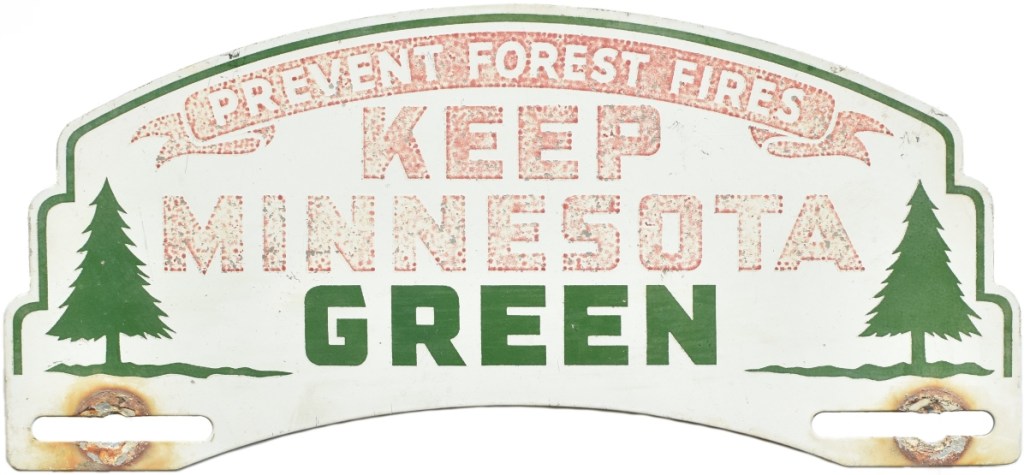
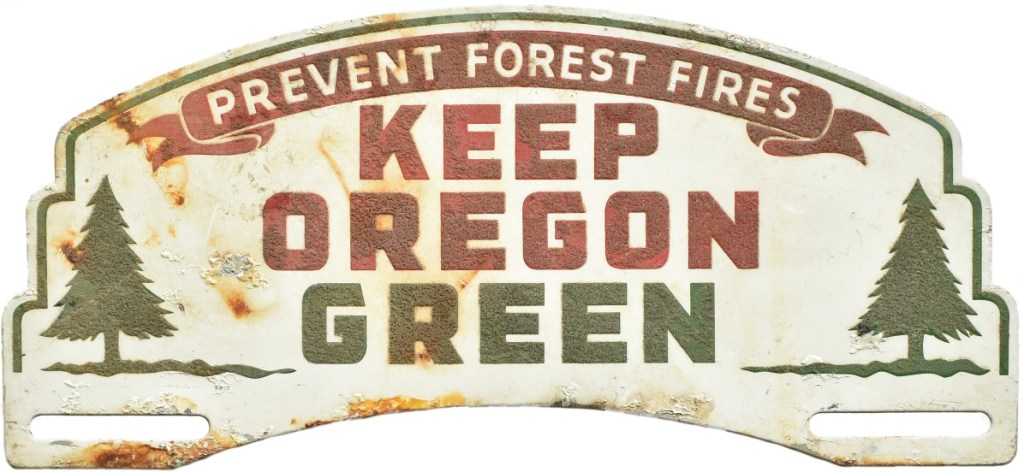
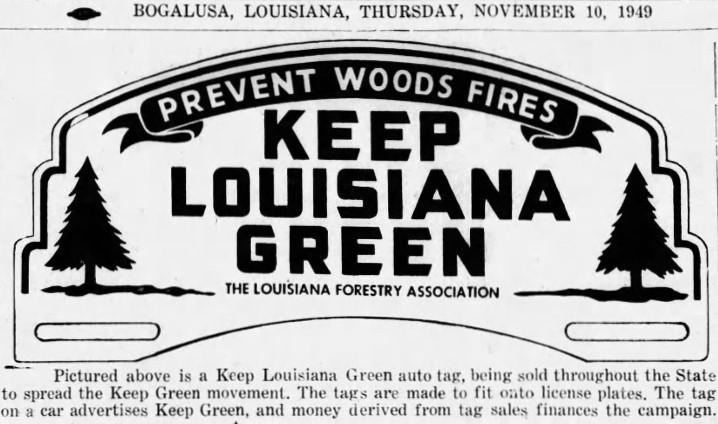
According to a sales pitch sent to the Keep Washington Green Association in April 1953, A.L. Lind indicated that Keep Green associations in 17 states were using these “aluminum auto extension plates.”
Based on surviving examples and period A.L. Lind literature, these “Keep Green” toppers are known from the following states: Oregon, Minnesota, Louisiana, Ohio, Kentucky, Arkansas, and West Virginia.
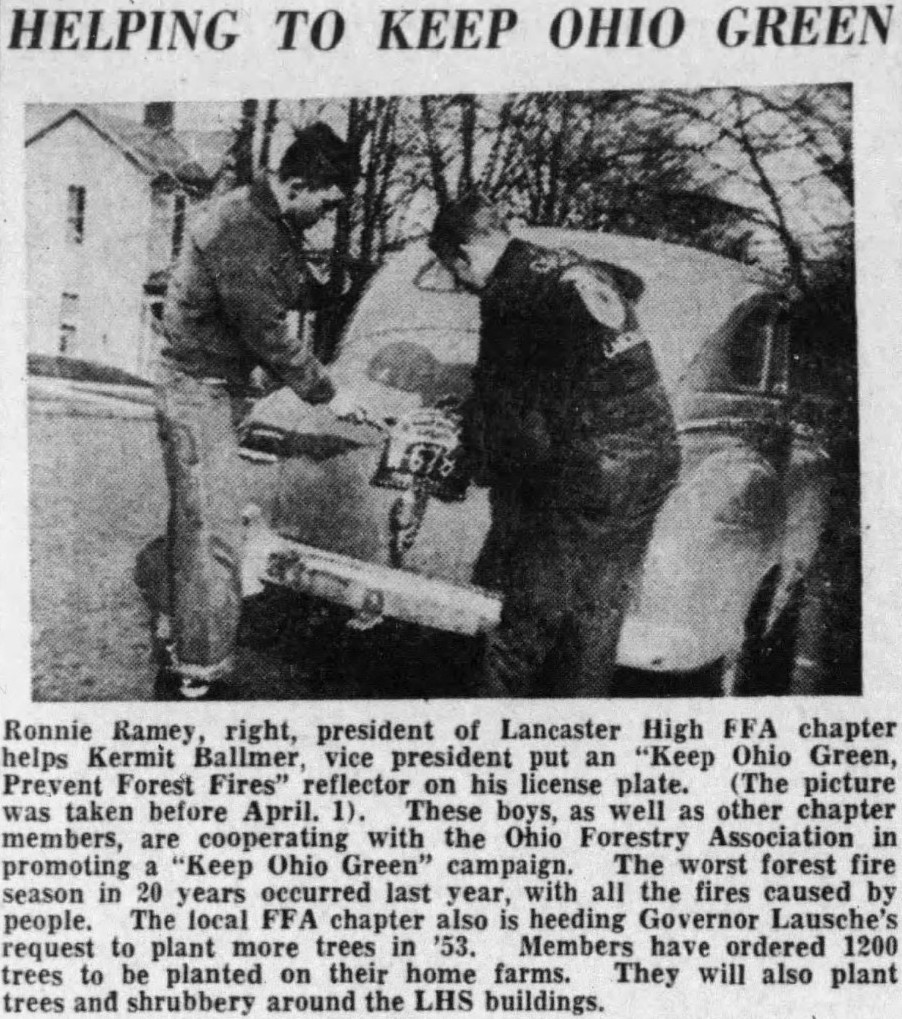
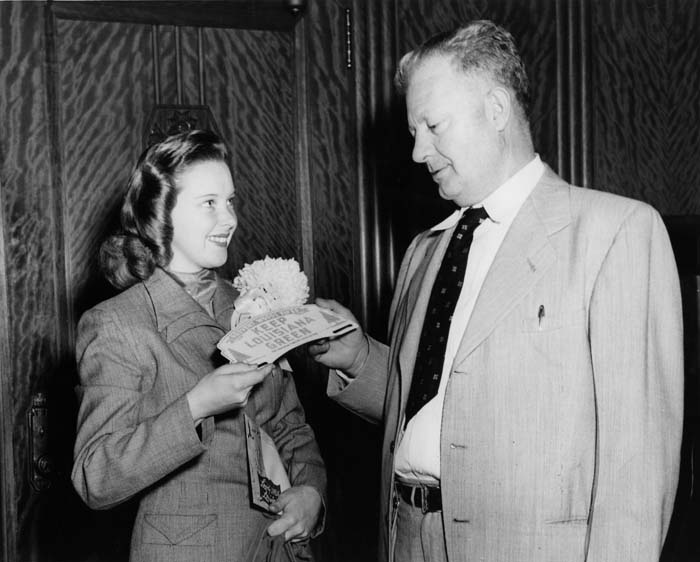
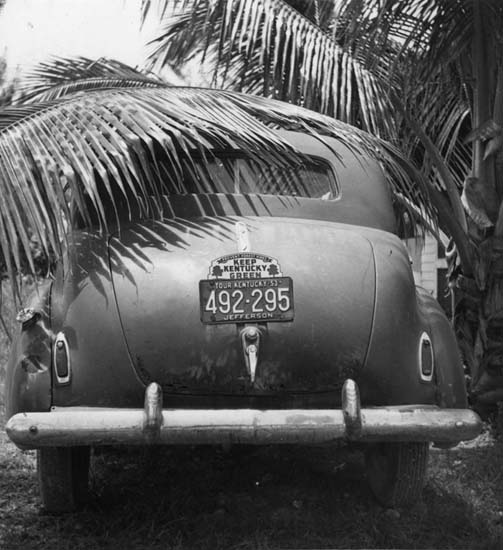
The heyday for these toppers seems to have been from approximately 1949 to 1953.
Growth | The 1950s
By the 1950s, Keep Green organizations were active all across the United States.
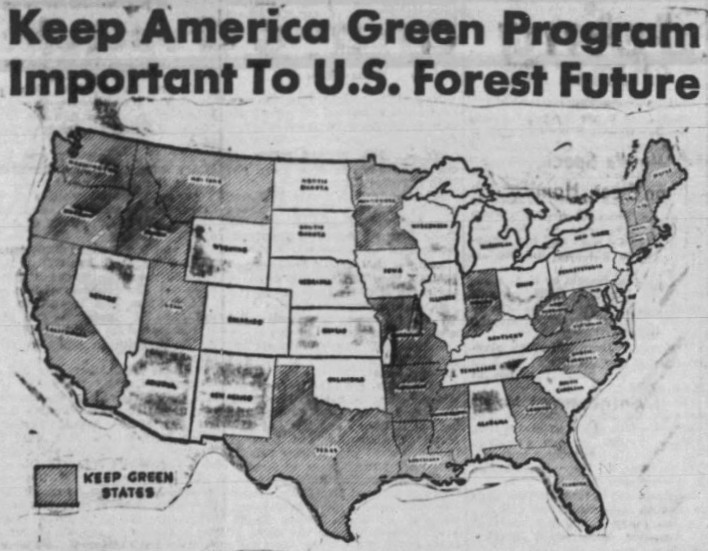
Some of these states created their own license plate topper designs instead of adopting the standard Lind company format.
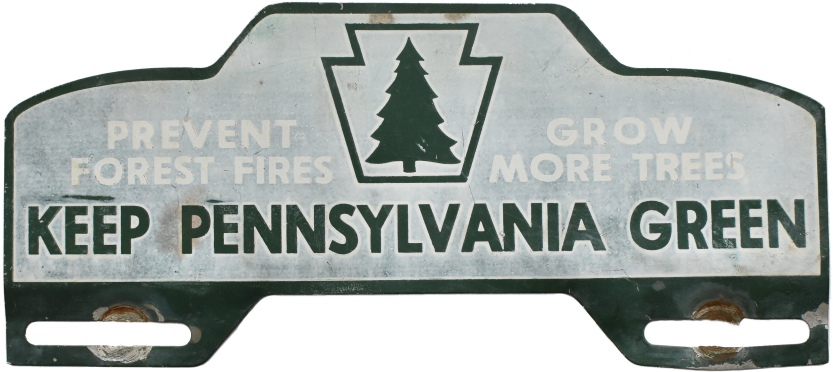
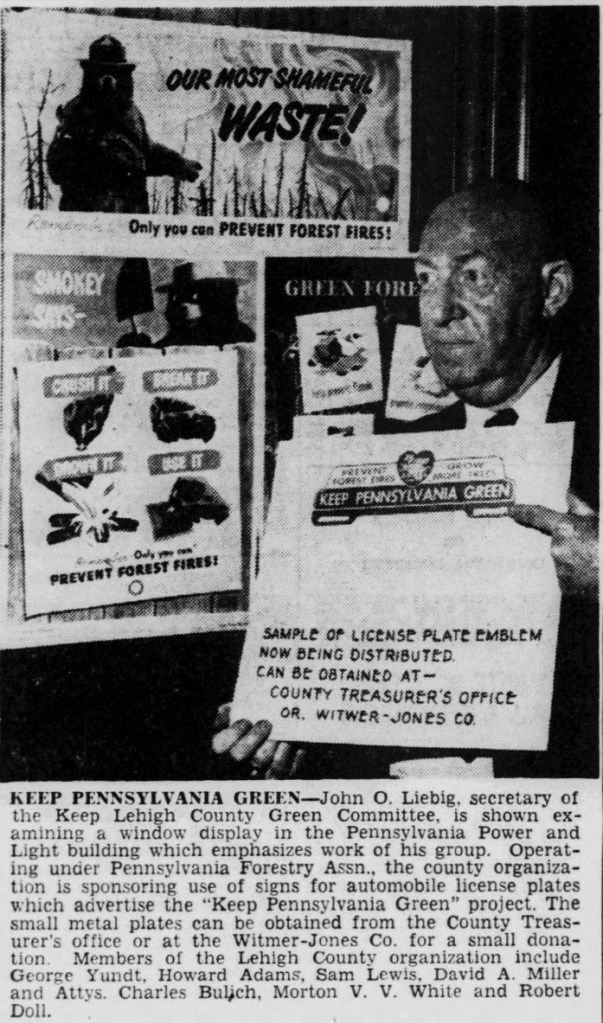
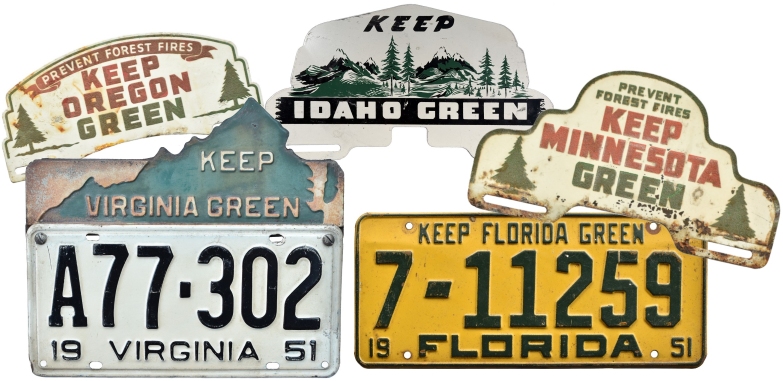
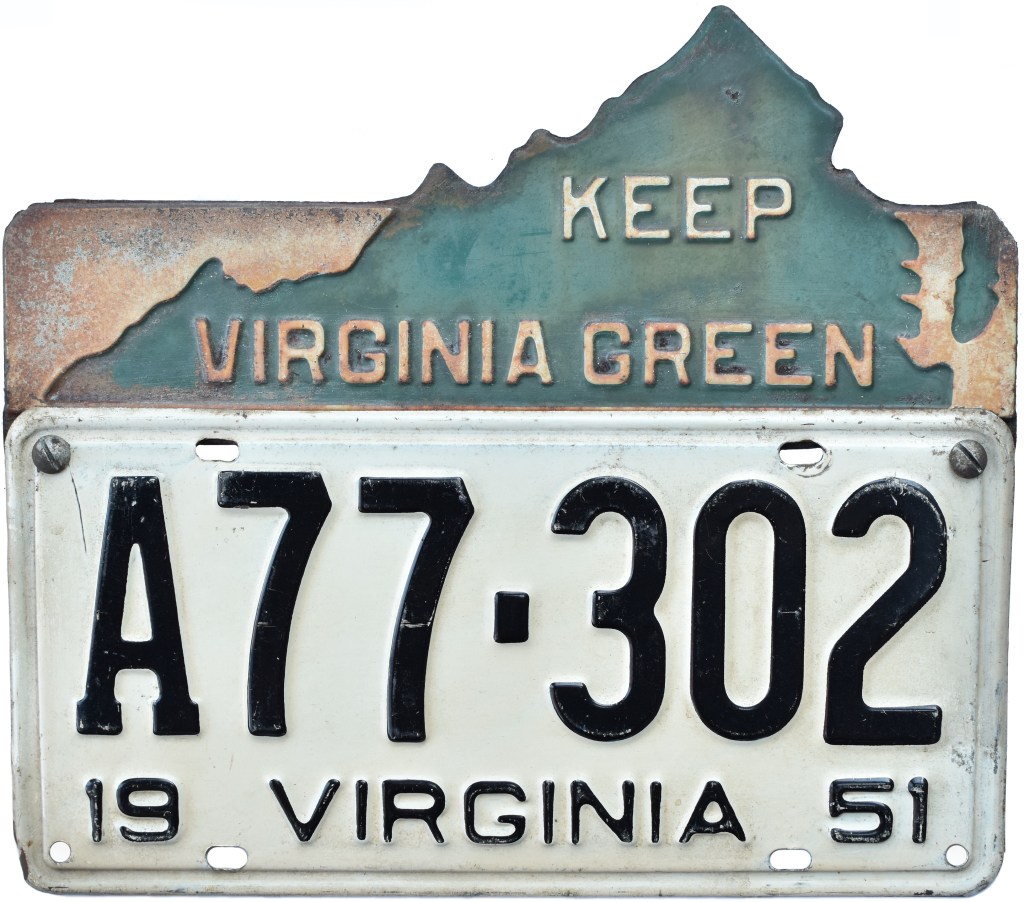
One of the most striking is Keep Virginia Green’s steel topper from the early 1950s, projecting well above the license plate with a state-shaped outline.
In 1954, taking advantage of a brief period where Washington state did not issue front license plates, Viking Industries of Tacoma designed a bold booster license plate for Keep Washington Green, which were sold to motorists to place on the front of their cars
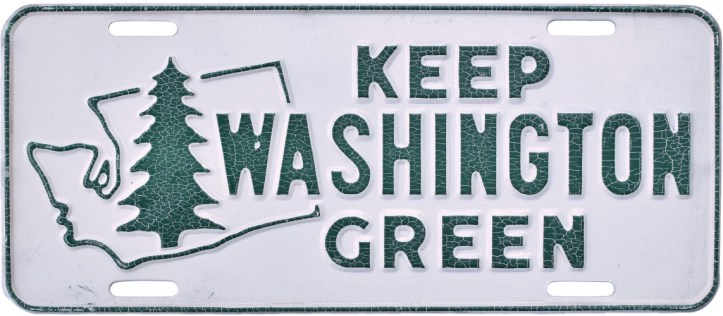
The Keep Washington Green plates were popular, but short-lived, with the state resuming license plate issuance in pairs in late 1954. It was a disappointment for Keep Washington Green, which had been trying hard to have the state’s official license plate incorporate the slogan since 1947. Despite continuous efforts, they never succeeded.
While the “Keep Green” slogan never appeared on the official license plates of the state that started the movement, it did make its way onto one state’s general license plate issue, and it was at the opposite corner of the country, in Florida, of all places. That state’s 1951 issue promoted the cause, and with no small degree of controversy. It replaced the longstanding “Sunshine State” legend, to the outrage of many who felt the state’s key selling point was sunshine and not forests.
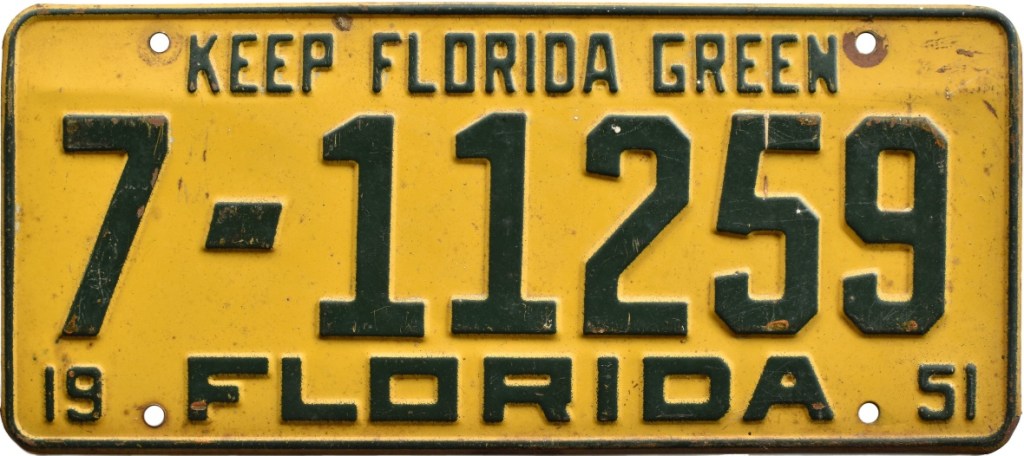
It only lasted that one year, and the sunshine was back in Florida for 1952.
Modern Times
The Keep Green movements faded away across the country, with few active today.
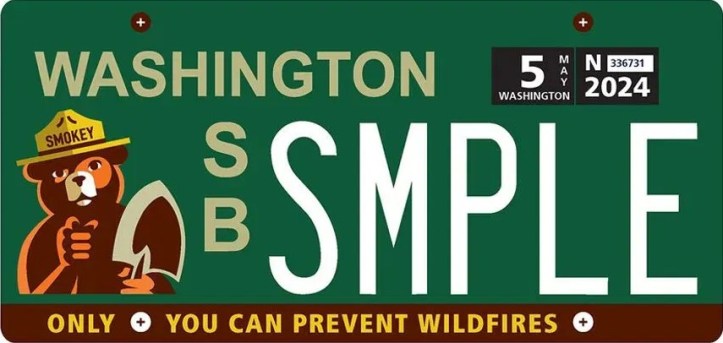
The original, Washington state’s, disbanded in 1995. Oregon, who was close behind Washington at the forefront, still has a very active Keep Oregon Green organization. One of its highly visible products is the beloved, and wildly popular, Smokey Bear optional license plate, which won the Automobile License Plate Collectors Association‘s 2019 Best Plate Award
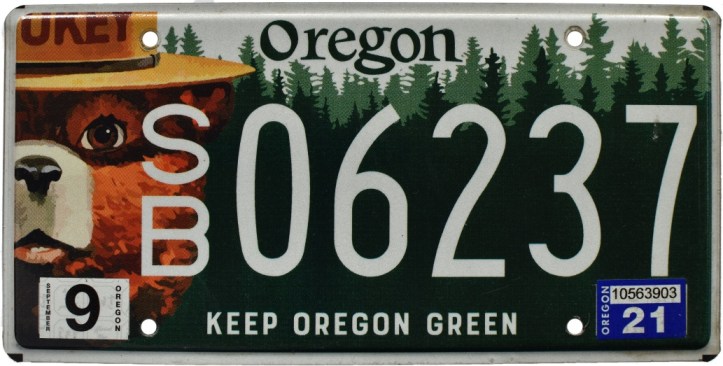
In 2026, Washington state began issuing a similar optional license plate, which supports the state’s Department of Natural Resources and “bears” Smokey’s more global “Only you can prevent wildfires” slogan (we in Washington state care about all places being green, not just our own state).