I am always on the hunt for license plates and related items to add to my collection – please see my Items wanted page or Contact me directly. Thanks!
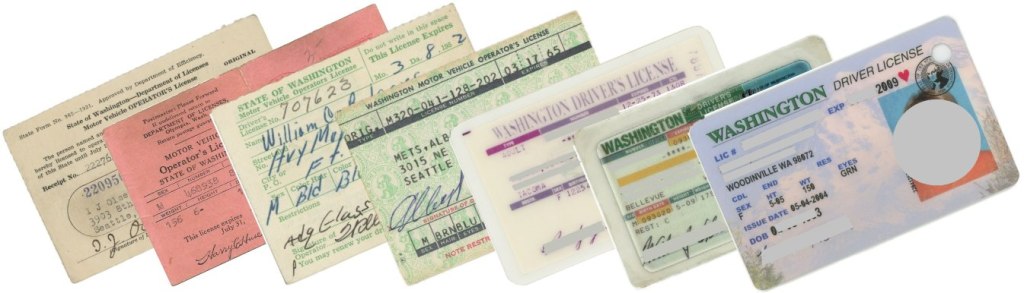
Driver’s licenses a century ago had little in common with the high-tech photo IDs of today. In Washington state, when automobile operators were first required to be licensed in 1921, no testing was required, no photograph was taken, names were often shortened to initials, and addresses were often as simple as a town name. Photos would not appear until 1969, and the familiar digitally-produced licenses came after the turn of the 21st century.
An informal history of licensing in Washington was recently found in the files of the Washington State Archives, which provided the following background on the issuance of drivers’ licenses:
In 1921 the Driver’s License Division was set up under the Director of Licenses. The fee was $1.00 for two years. To obtain a license, the driver was required to furnish the signatures of two persons who certified that the applicant was a competent driver and had no physical infirmities which would impair his ability to drive safely. An impression of the state seal had to be placed on every license. This was done by an electric driven sealing device. The minimum age was continued at 15 years. Drivers licensed in the first two year period number 301,110.
All licenses, regardless of issue date, expired on July 31 of odd-numbered years through the 1940s. With 1921 as the first of issuance, the earliest dated licenses expired in 1923. The history also states that for the first period of issue only, any drivers convicted of an offense would have their licenses exchanged for a blue one, and after a second offense, a yellow one was issued. Such instances were fairly uncommon: a Bellingham Herald article from June 2, 1922 stated that in the first half of 1922, 168 blue cards were issued, and only four yellow. This practice was discontinued after the first two-year cycle; apparently some officials were caught with violations and didn’t appreciate their licenses being marked.
All licenses through 1933 are duly approved by the Department of Efficiency.
1923 (1921 to July 1923) – First Issue
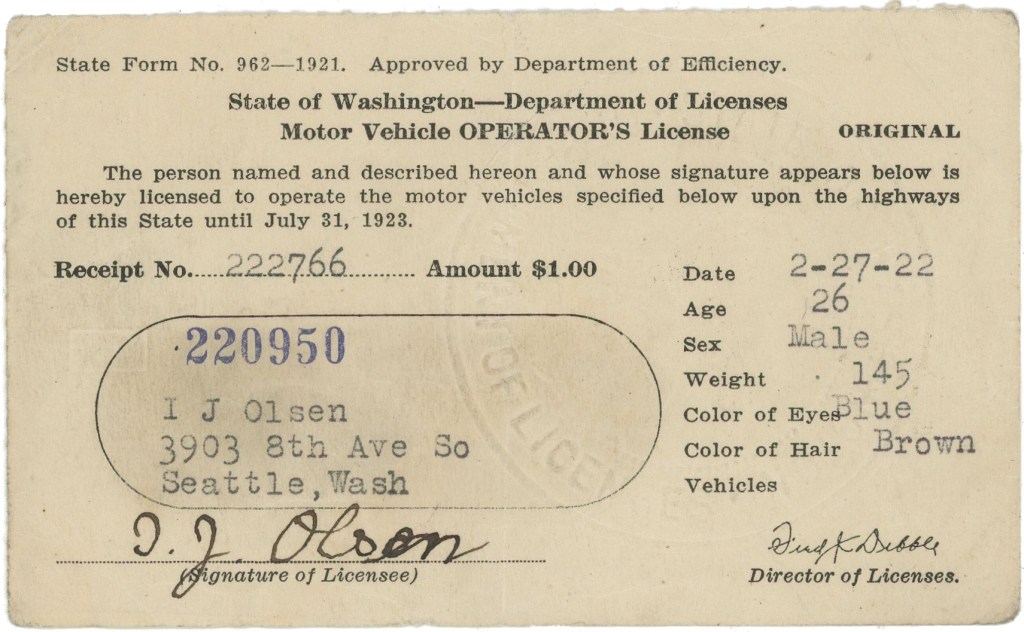
Issued to: I.J. Olsen, 3903 8th Ave S, Seattle
1925 (August 1923 to July 1925)
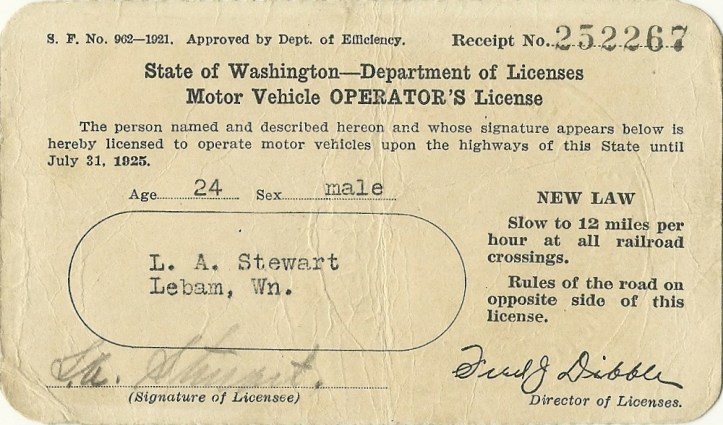
Issued to: L.A. Stewart, Lebam
1927 (August 1925 to July 1927)
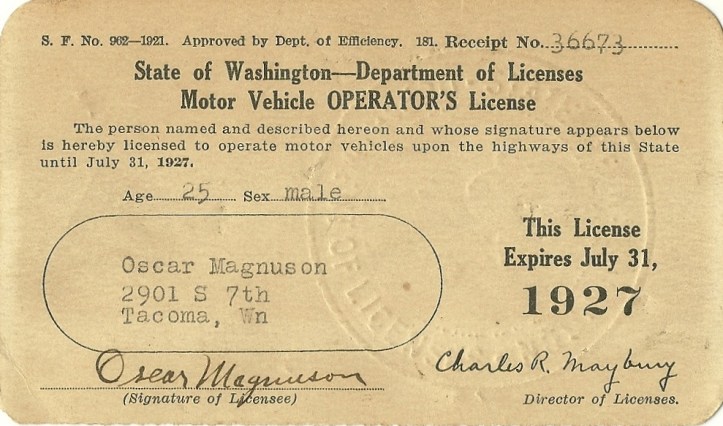
Issued to: Oscar Magnuson, 2901 S 7th, Tacoma
1929 (August 1927 to July 1929)
Licenses had always been printed in a standard 3×5″ size, which proved to be too large for the holders and wallets where recipients usually kept them. It was common for people to cut their licenses into a smaller size for convenience, and for the 1927-1929 issue, state printers aided the process by condensing the data field into a smaller area and providing dotted lines to guide the cuts without removing important information.
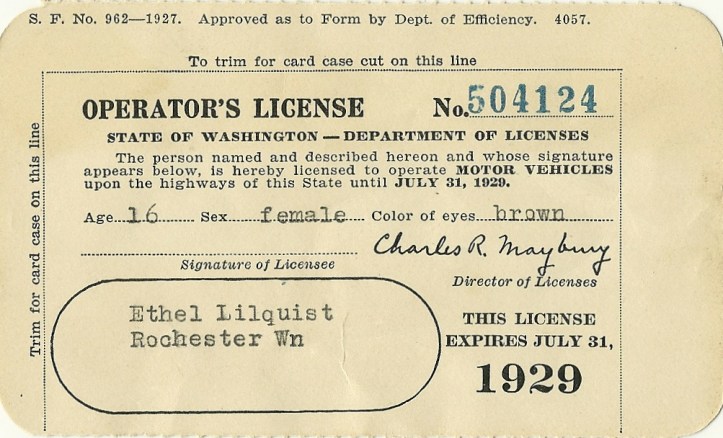
Issued to: Ethel Lilquist, Rochester
1931 (August 1929 to July 1931)
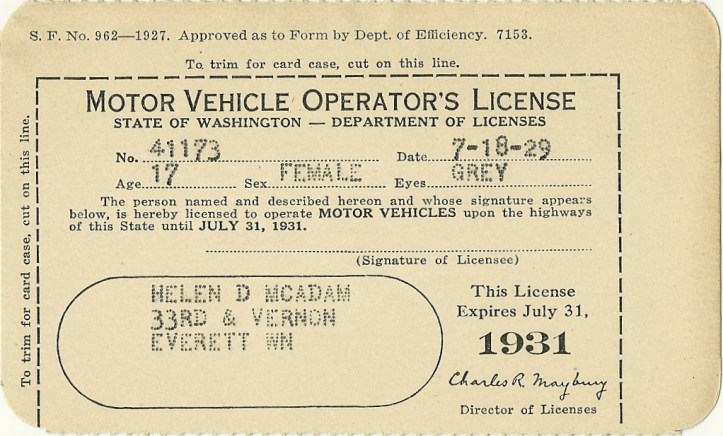
Issued to: Helen D McAdam, 33rd & Vernon, Everett
1933 (August 1931 to July 1933)
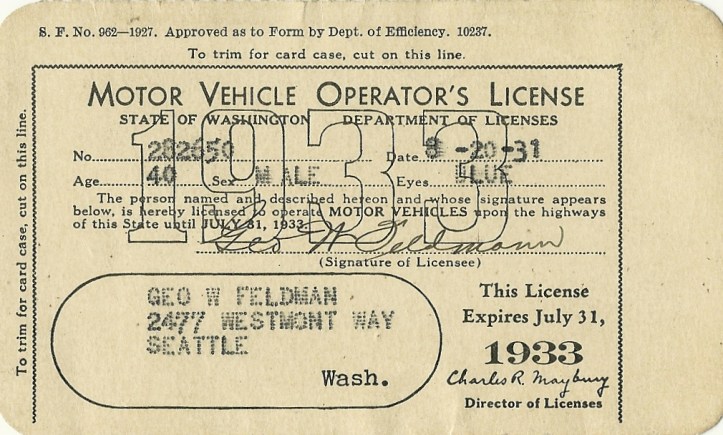
Issued to: George W Feldman, 2477 Westmont Way, Seattle
1935 (August 1933 to July 1935)
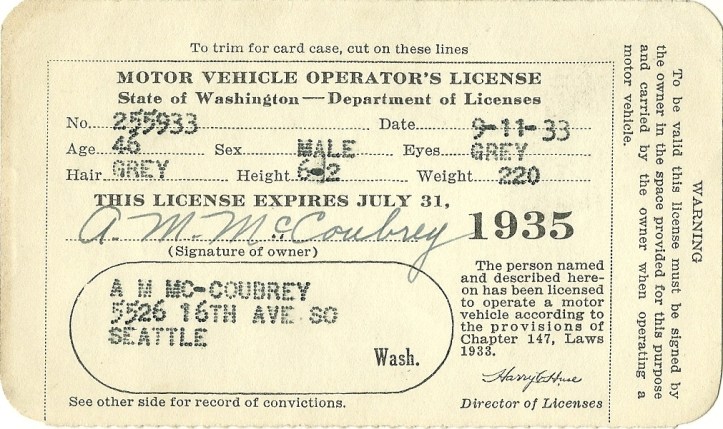
Issued to: A M McCoubrey, 5526 16th Ave S, Seattle
1937 (August 1935 to July 1937)
The Washington State Department of Efficiency, whose approval of drivers license forms had been noted through 1933, apparently missed an obvious innovation for efficiency: doing away with mailing envelopes.
The 1935-1937 licenses were the first to be designed essentially as a post card, with the postage stamped directly on the license and the card mailed without the additional cost or labor of stuffing into a window envelope first.
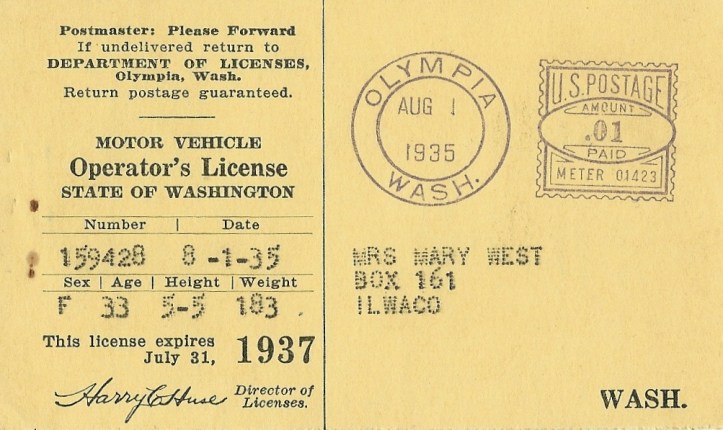
Issued to: Mary West, Box 161, Ilwaco
The dotted lines for cutting the paper into a smaller size were relocated to the backside. One period newspaper account noted the flaw with that process: longer names or addresses could frequently span too far across the license and inadvertently be cut off by someone following the standard lines while only looking at the back of the license.
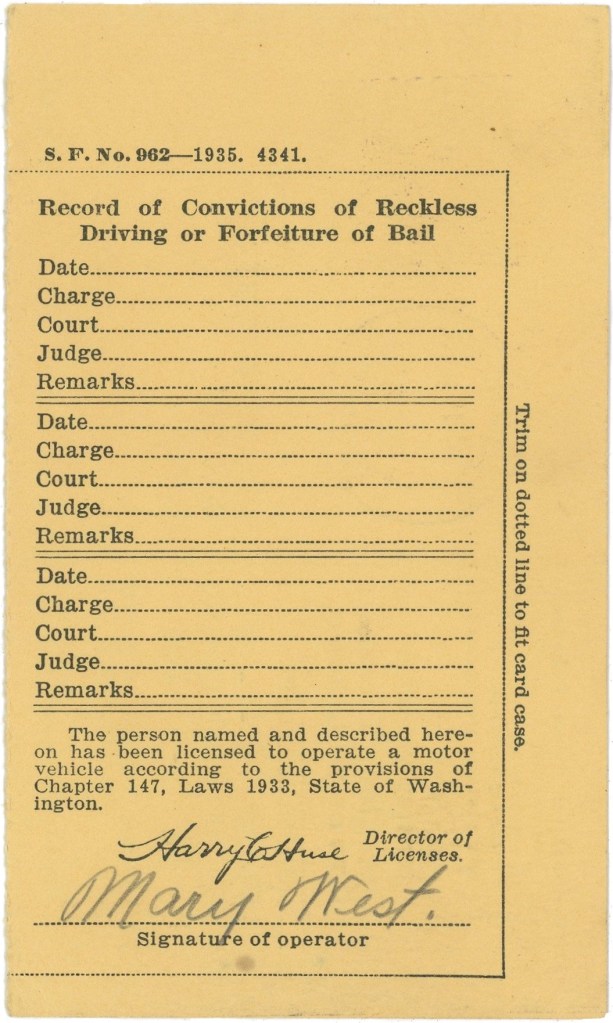
1939 (August 1937 to July 1939)
The 1937 state legislature passed an updated vehicle code that resulted in two variations of the 1939-expiring licenses. The new laws mandated that a licensee submit to a written and physical driver’s examination every four years, effective August 1, 1937. Because all licenses in the state expired July 31, 1937, the massive demand for driver exams would far exceed the state’s capacity to administer them, so to reduce the burden, any renewal applications postmarked before August 1 could forgo a driver exam. In exchange, these early issues received a red-colored license that was indicated on the back as non-renewable; these licenseholders were required to take an exam in order to obtain their 1941 licenses.
So many people procrastinated at renewing their licenses prior to August 1, 1937 that the state pushed back the deadline to August 10. Any renewal application postmarked before then was exempt from a driver’s exam that year. The state had to process a massive backlog of applications, as period estimates were 10,000 to 20,000 renewals were submitted on the last possible day.
Anyone who had completed the driver’s exam received a blue-colored license for the 1939 expiration, with a note on the back that the license could be renewed without an examination in 1941.
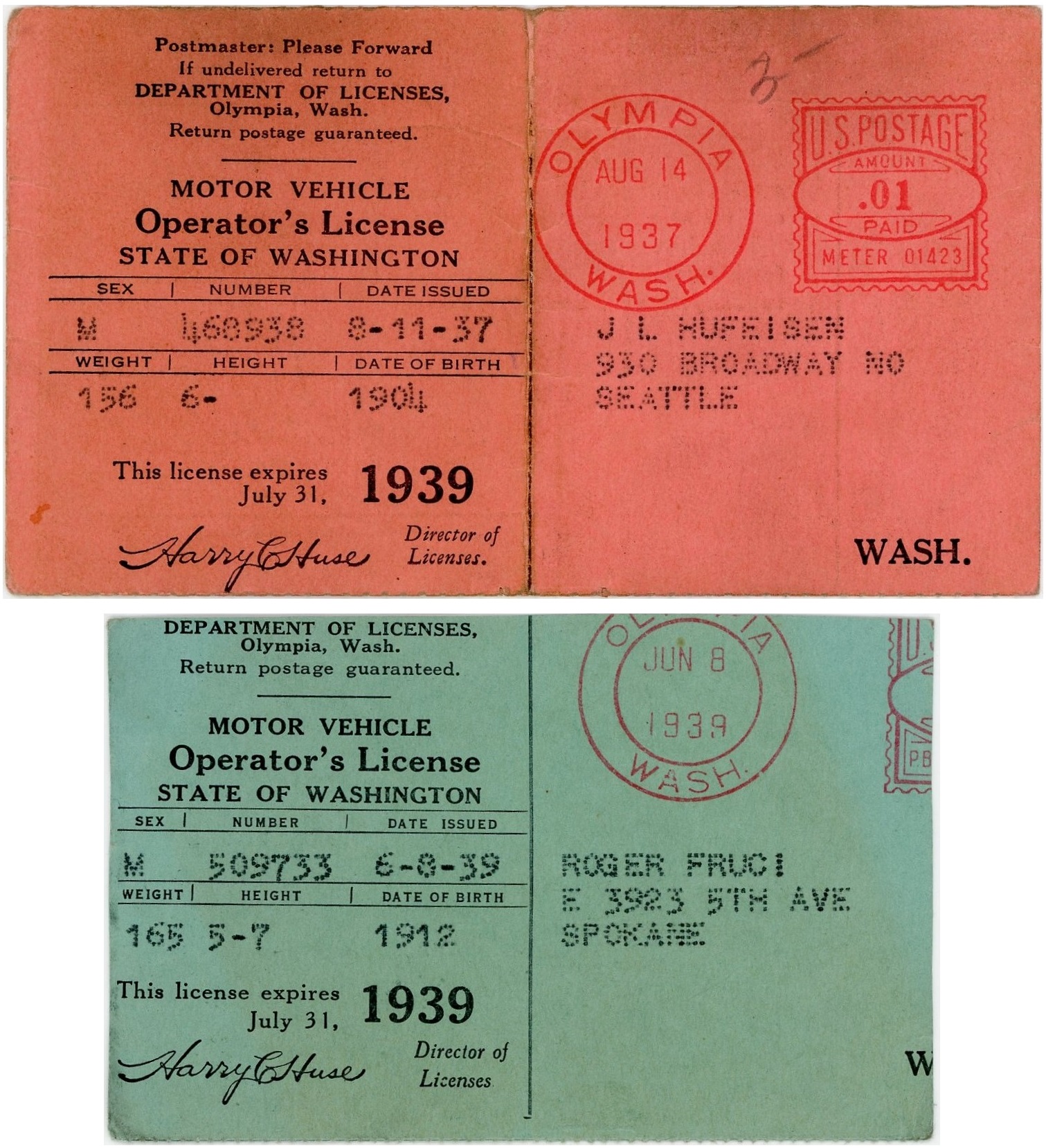
Type 1 (red) issued to: J L Hufeisen, 930 Broadway, Seattle
Type 2 (blue, trimmed to fit a wallet) issued to: Roger Fruci, 3923 E 5th Ave, Spokane
1941 (August 1939 to July 1941)

Issued to: Jacob Winterton, Blaine
1943 (August 1941 to July 1943)
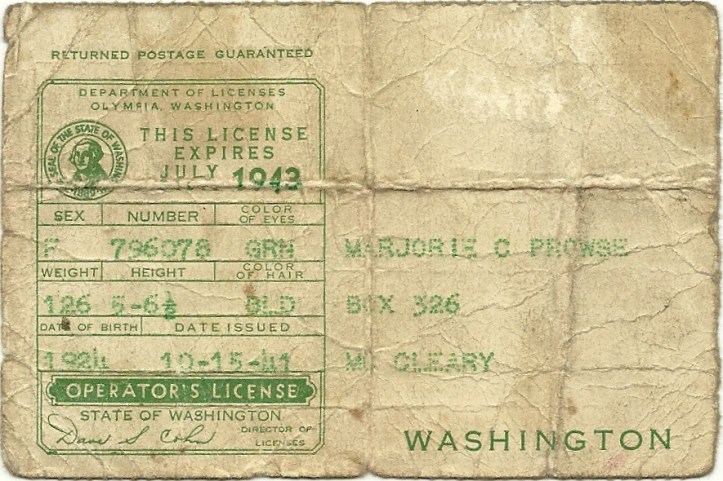
Issued to: Marjorie C Prowse, Box 326 McCleary
1945 (August 1943 to July 1945)
The waning War years brought changes to Washington driver’s licenses that were both a step forward and backwards. The state obtained photostatic equipment, modernizing the production of licenses, but that production was in many ways more primitive, with the fields handwritten!
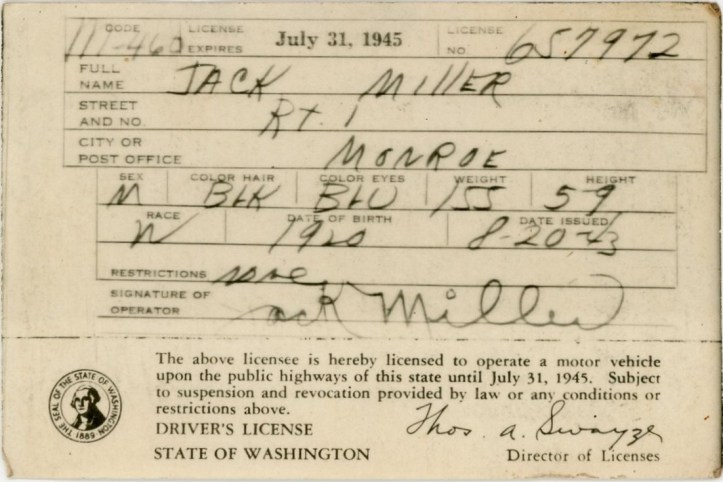
Issued to: Jack Miller, Rt 1, Monroe
1947 (August 1945 to July 1947)
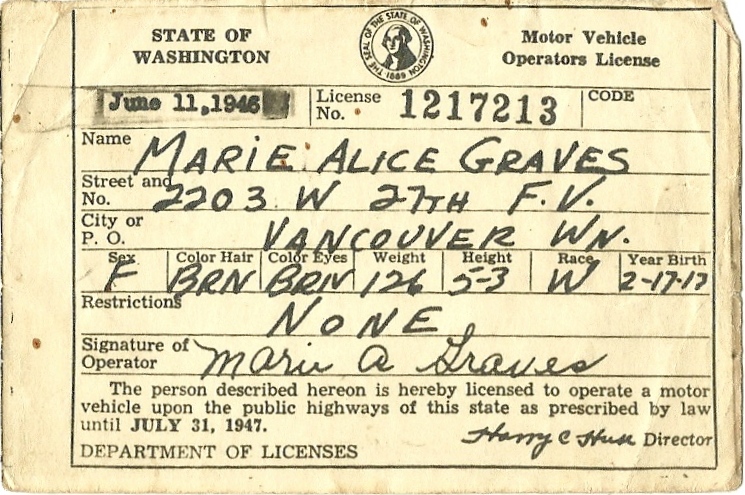
Issued to: Marie Alice Graves, 2203 W 27th, Vancouver (F.V. = Fruit Valley neighborhood?)
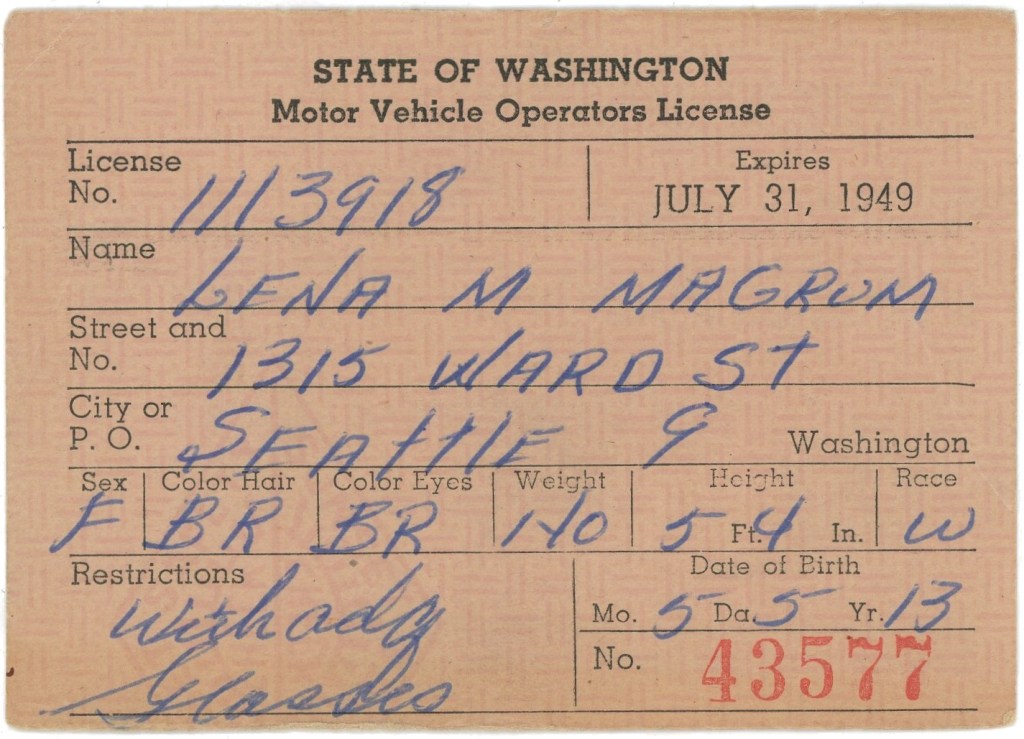
1949 (August 1947 to July 1949)
1950s
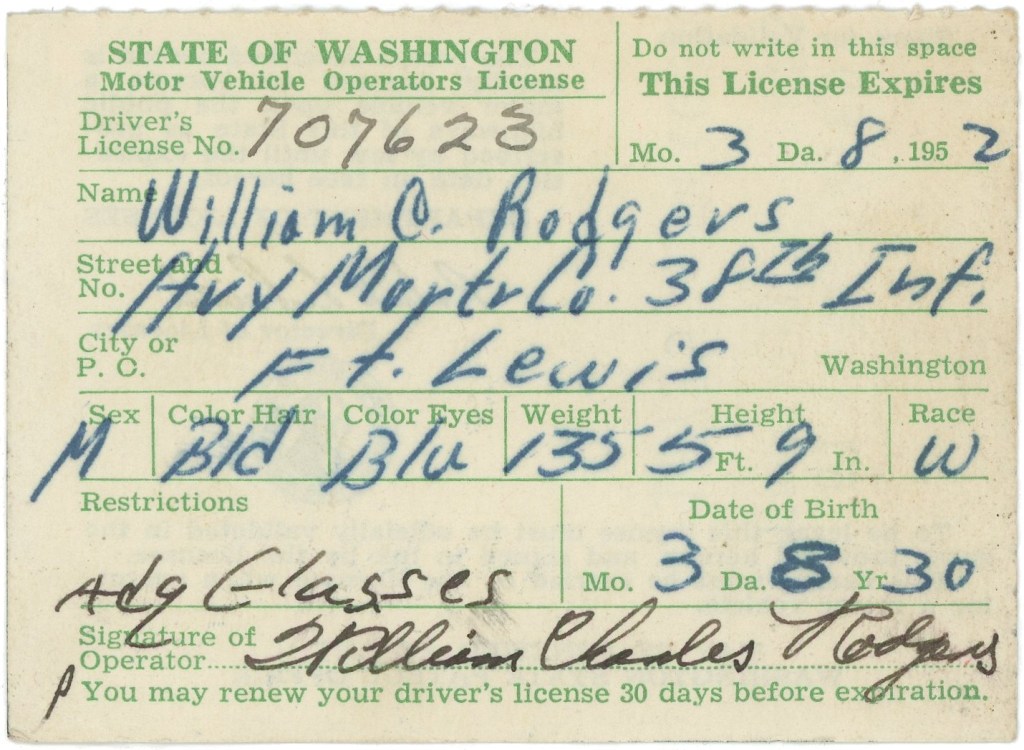
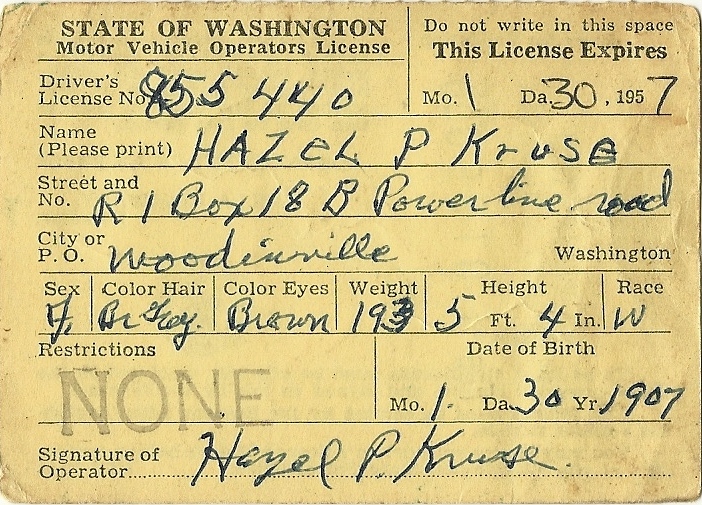
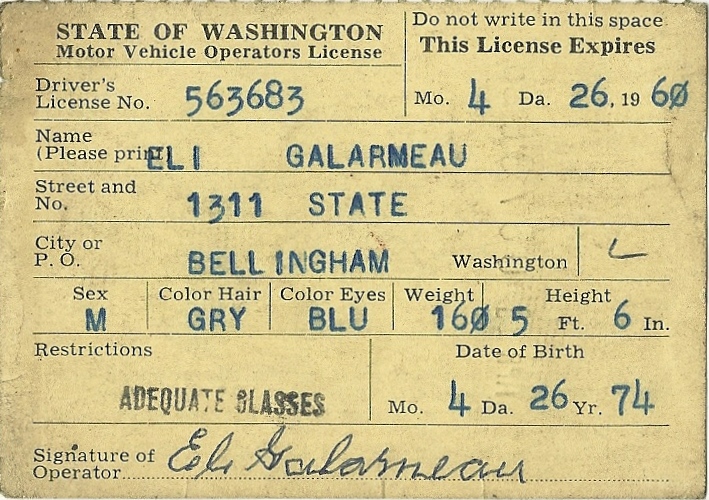
Since driver licensing began in 1921, licenses all followed the same validity periods: every license expired on July 31 of odd-numbered years. 1949 would be the final year for that practice. Going forward, the state adopted the system still used today, where driver’s licenses expire on the licensee’s birthday.
1960s: the Computer Age
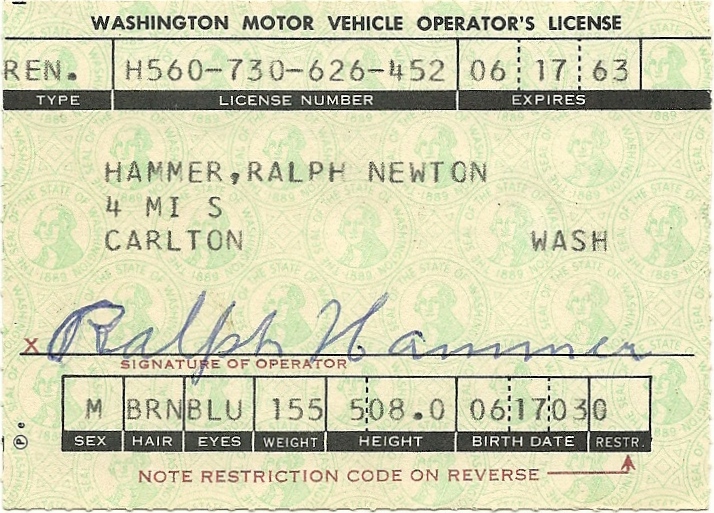
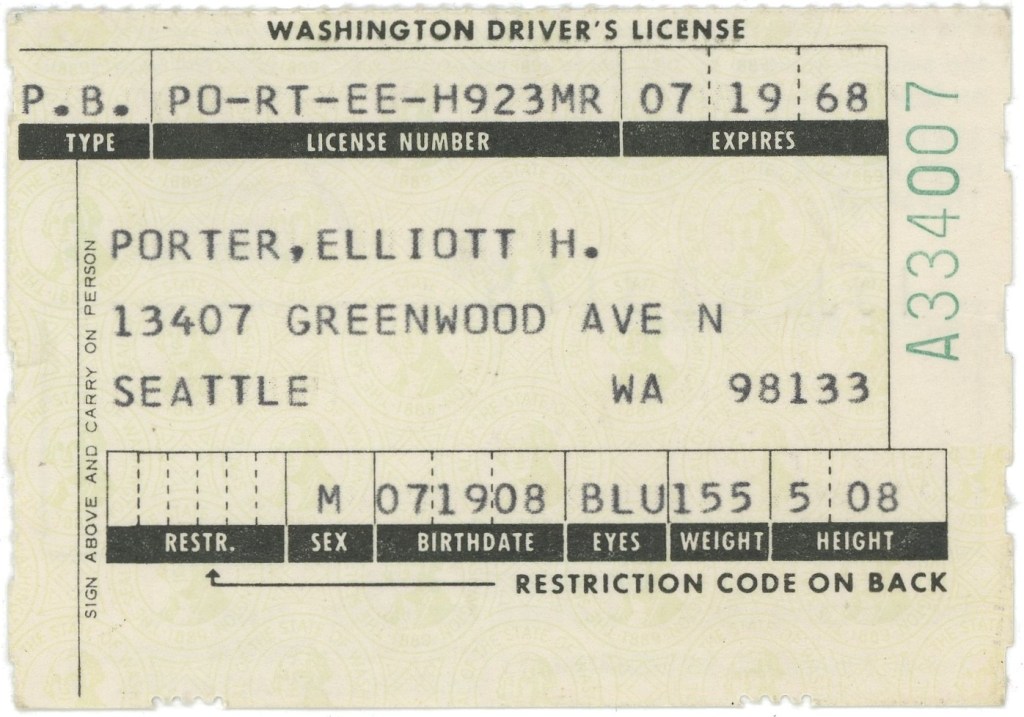
Computerization modernized licenses in this era.
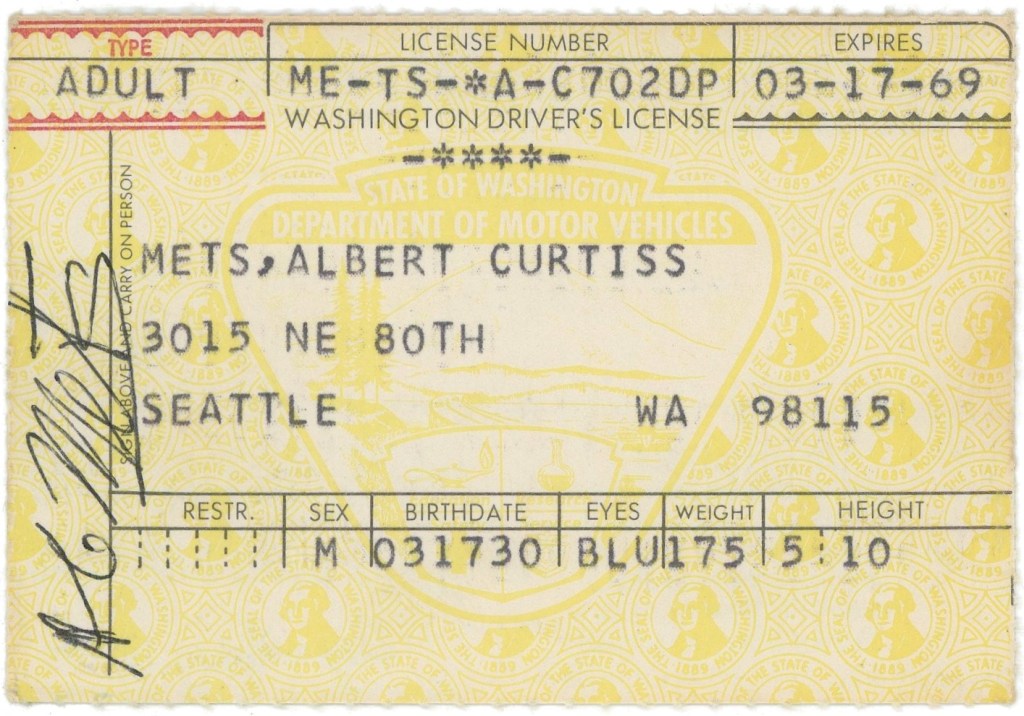
1969: Photo IDs arrive
At the end of the 1960s, only twenty states in the U.S. were issuing photo licenses, and Washington joined them after the 1969 legislature mandated a “standard and readily recognizable means of identification.”
Dek Processes of Fort Wayne, Indiana won the contract to supply the state with more than a million photo licenses, at a cost of $0.25 each. The state in turn increased the license fee to the public from the previous $5.00 per license to $5.50.
The new licenses were issued the public starting in September of 1969. “It will be virtually impossible to falsify or counterfeit these documents,” director of the state Department of Motor Vehicles Douglas Toms told the press.
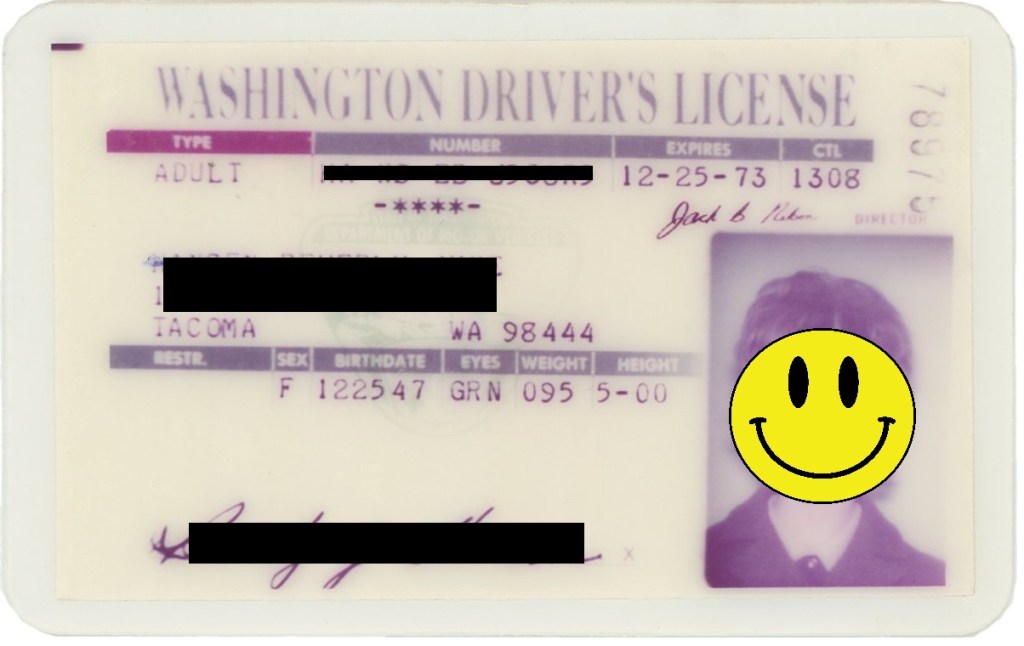
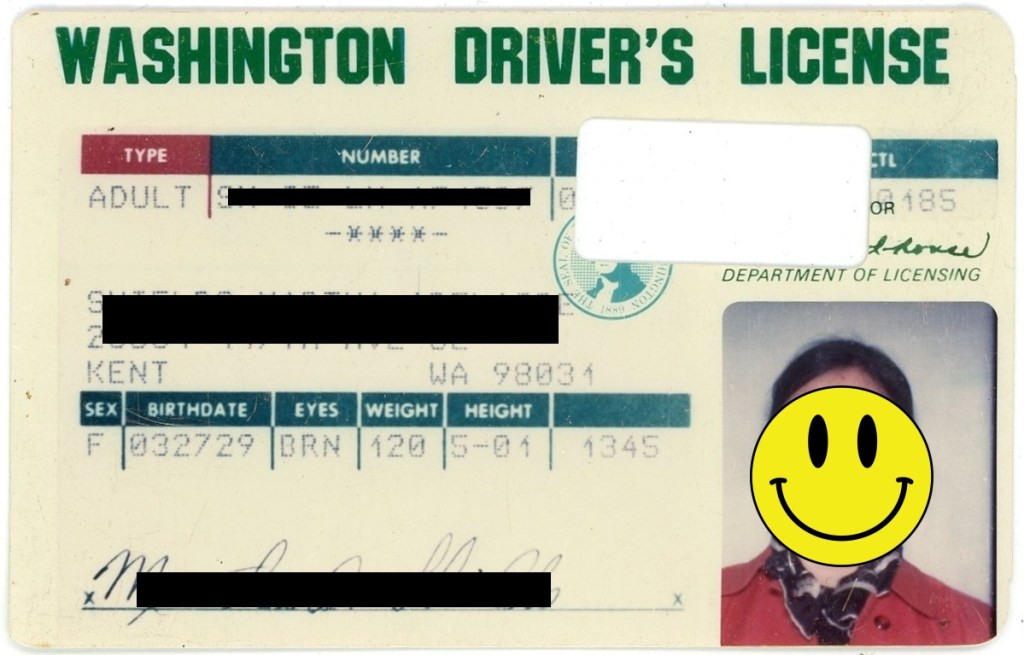
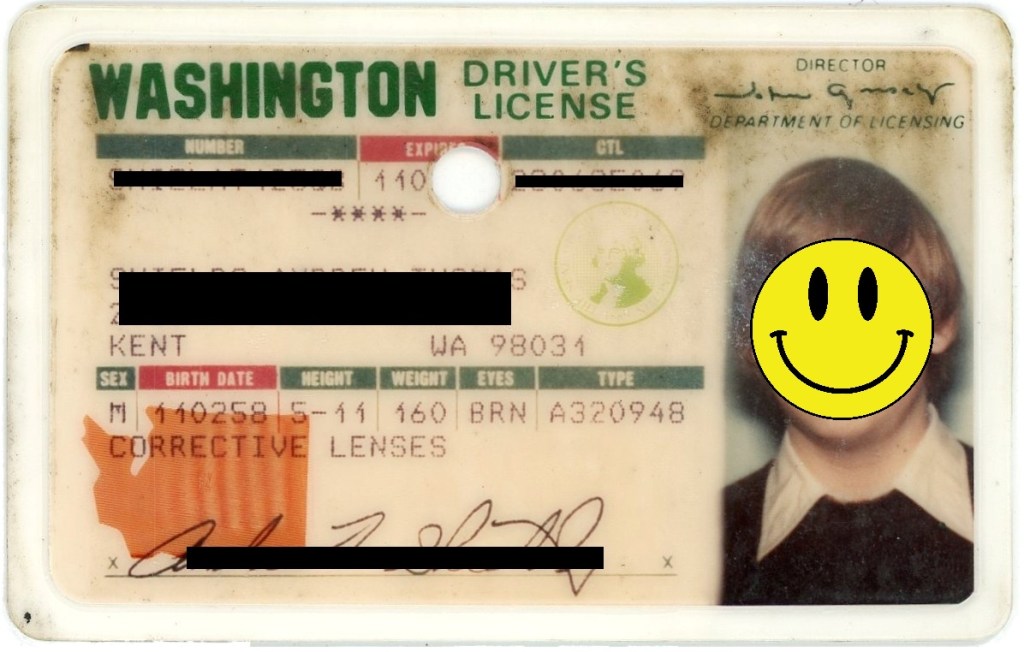
By the mid-1970s, Washington’s licenses settled into a familiar and predictable format that would persist through the turn of the century. Aside from minor formatting changes, they continued with the same basic laminated design.
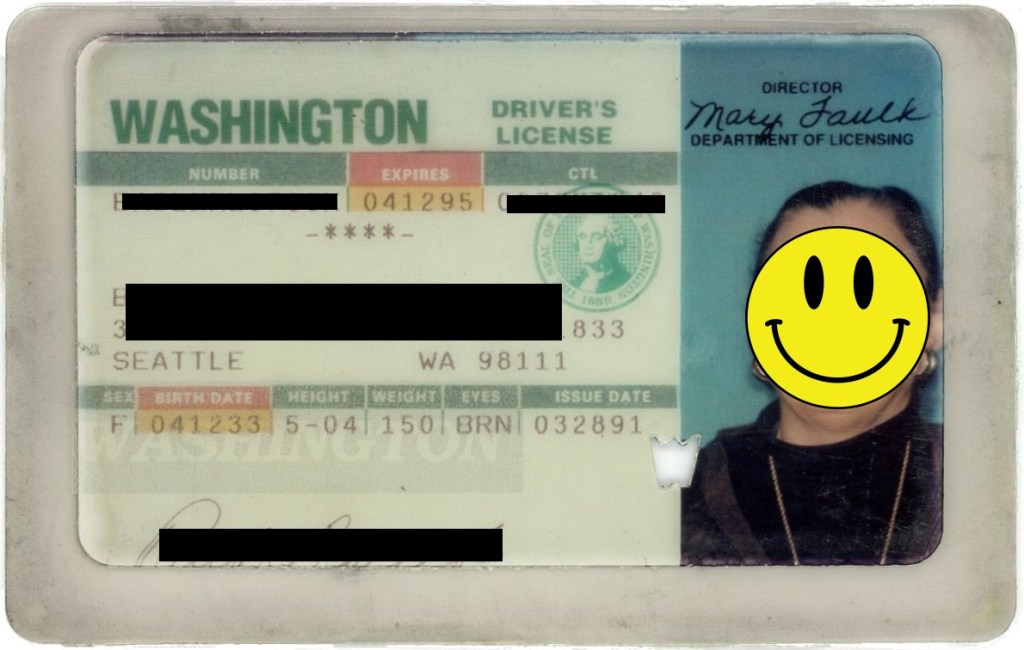
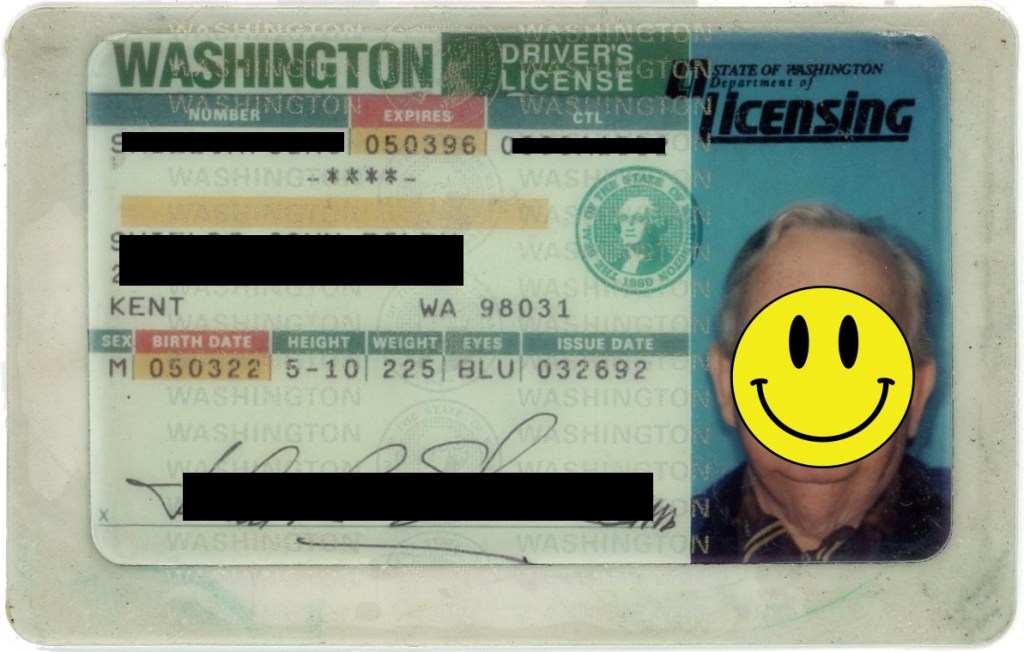
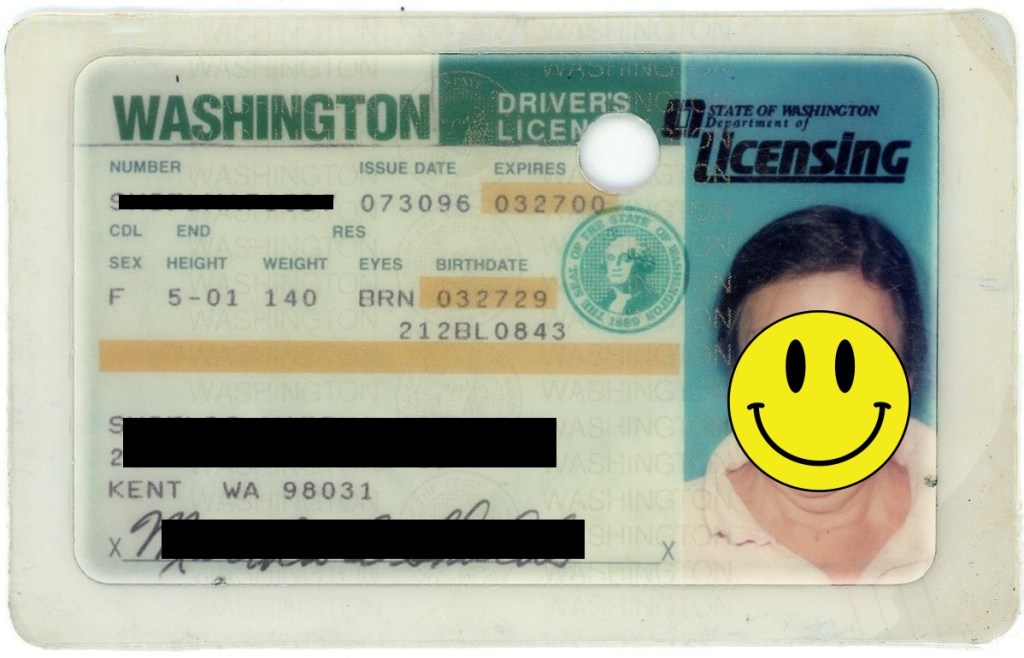
Digital Licenses
Washington’s driver’s licenses caught up with the modern world shortly after the dawn of the 21st century. In June 2001, the state began phasing in digitally-produced IDs across the state, replacing the archaic laminated process.
Organ donors were noted with a red heart after the expiration date
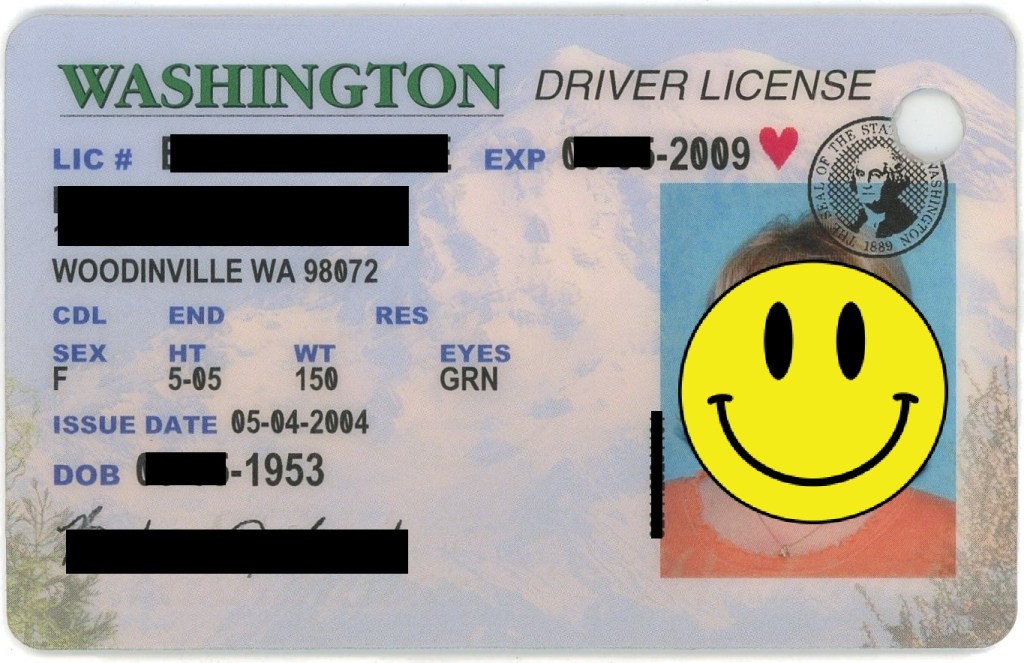
Licenses issued to minors were in a vertical format for much easier validation. Under the old design, an easy-to-miss “NOT 21 UNTIL MMDDYY” was printed above the licensee’s address
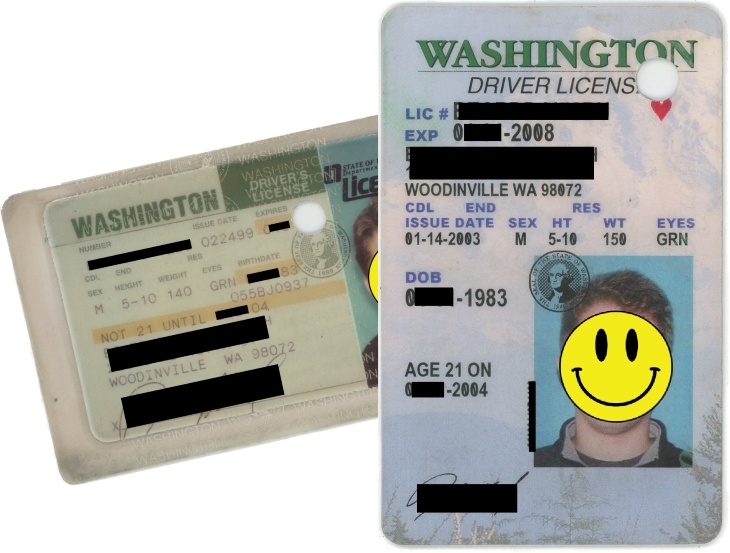
REV 09-16-2009 Design Change
A format change in 2009 updated the design to a new format, marked with “Rev 09-16-2009” at the bottom. Since photos had first appeared on licenses in 1968, they had always been on the right-hand side of the card, this update moved the photo to the left, with a smaller, somewhat watermarked image appearing on the right (as continues today).
Organ donors were more clearly marked with a “DONOR” followed by a red heart, which appeared under the “License” text at the top.
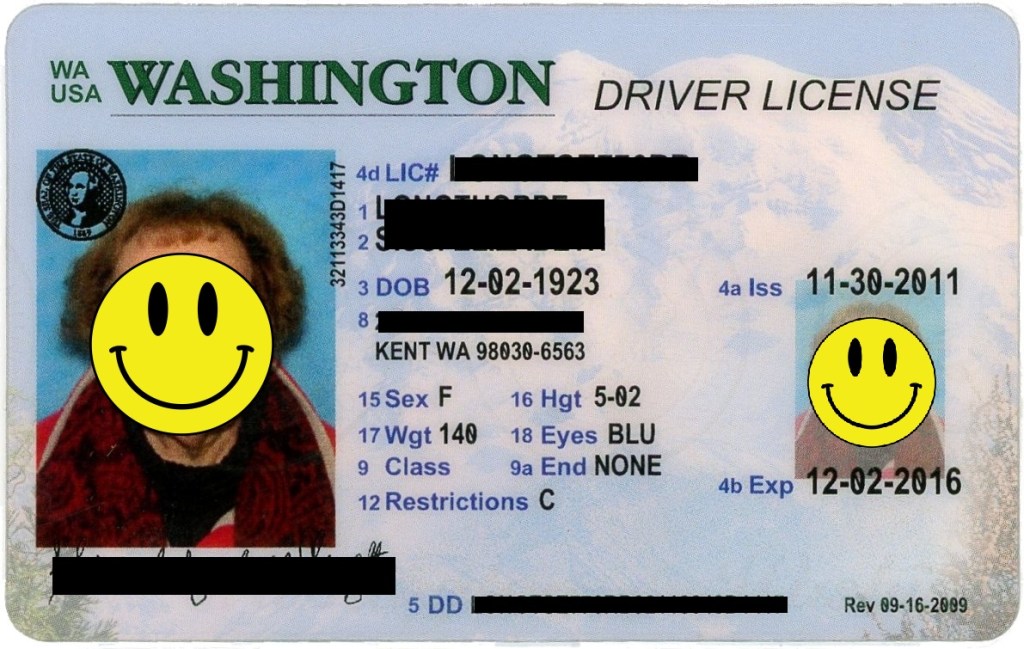
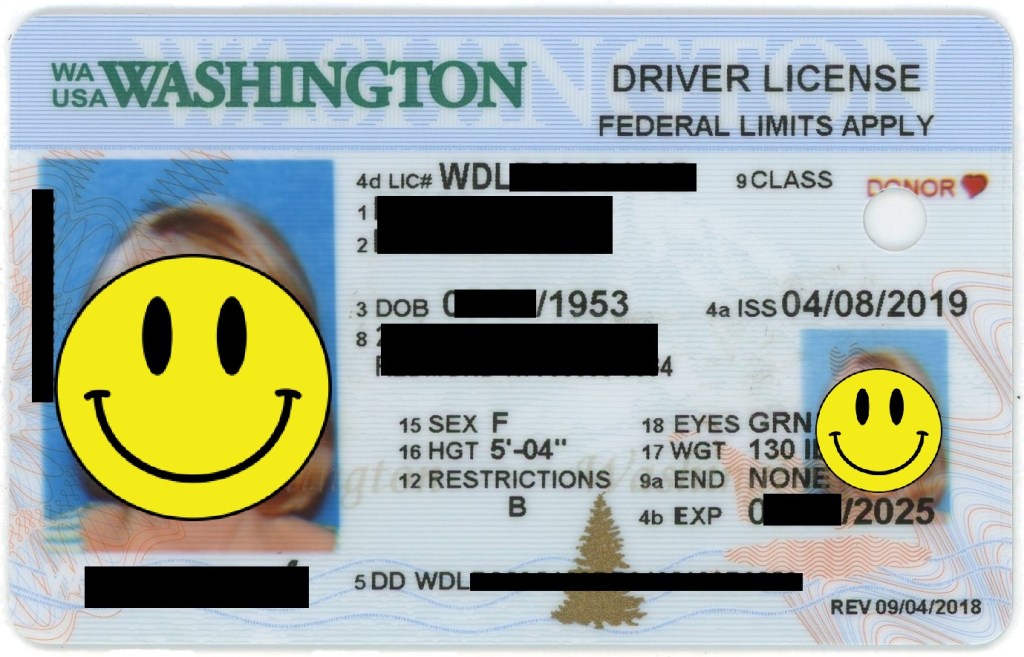
REV 09/024/2018 Design Change
This change also reset an individual’s driver license number to an alfa-numeric code beginning with “WDL.” Until this point, it was easy for someone to remember their driver’s license number, if they cared to: the number was the first five letters of the licensee’s last name, followed by first and middle initial, and then a three-number/two-letter serial number (for example, Warren G. Magnusson would be MAGNUWG123AB; Gypsy Rose Lee would be LEE**GR123AB).
Enhanced Driver Licenses
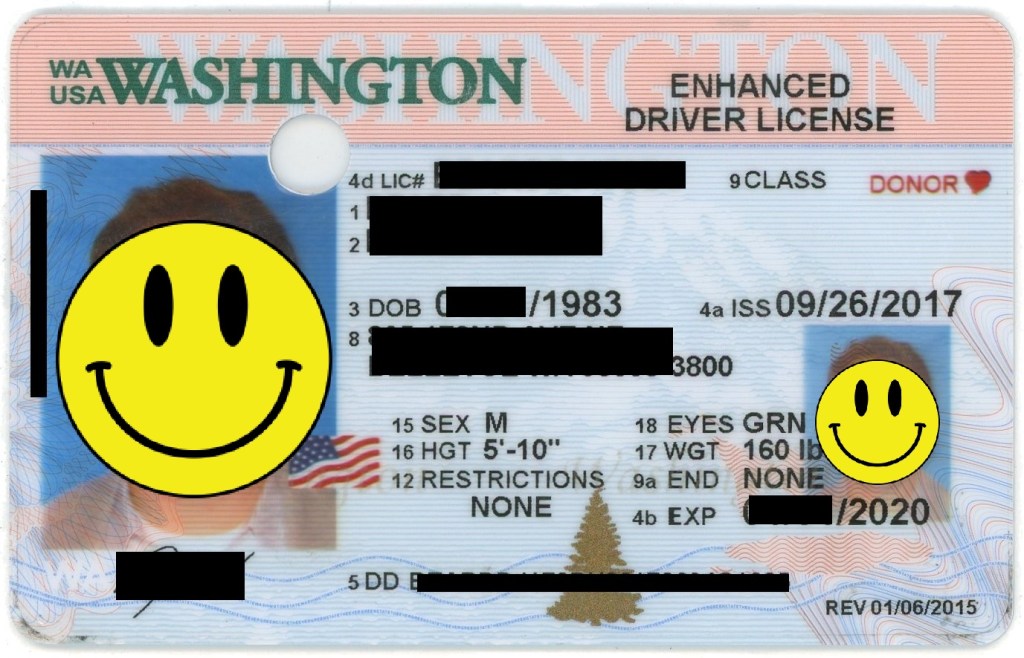
Washington state was a pioneer in a new technology: Enhanced Driver Licenses. Under a pilot program authorized in 2007, Washington became the first state to offer optional enhanced licenses, which function is proof of citizenship and contain RFID chips for easier verification. Crucially, this allows holders of the licenses to enter the United States by sea or land without a passport.
Washington state began issuing enhanced licenses in 2008, prioritizing the issue ahead of the 2010 Winter Olympics in Vancouver, BC and the high volume of cross-border traffic it would bring. The program spread to other Canada-bordering states as well; by 2009, Michigan, New York, and Vermont were also offering enhanced licenses.
Enhanced licenses were differentiated from standard issues with a large red header and a U.S. flag graphic indicating citizenship. With their RFID chips, they were also noticeably thicker than standard licenses.
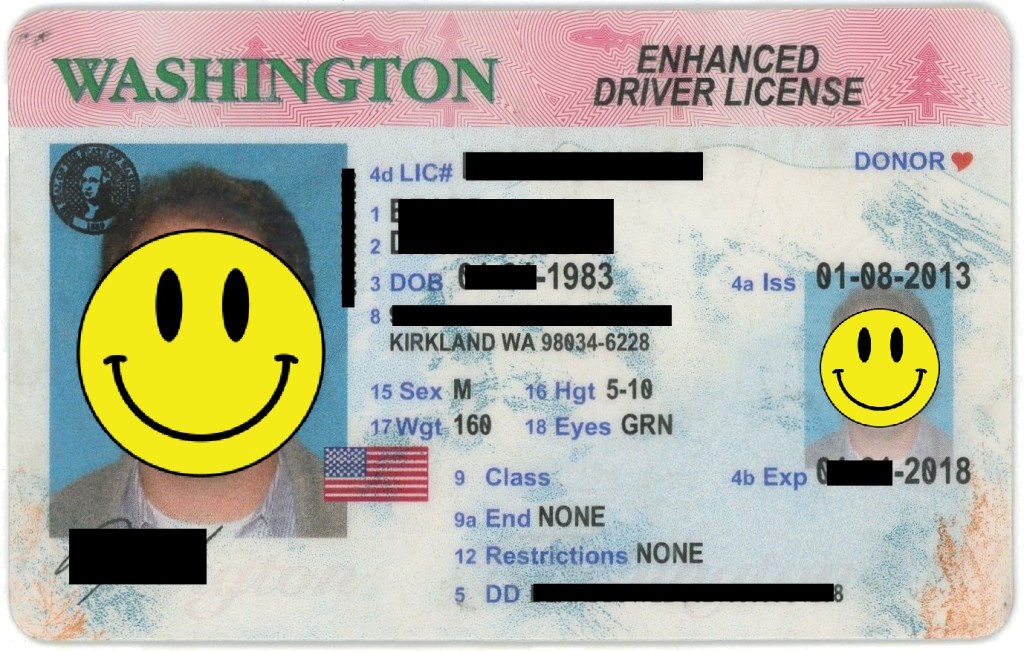
A design change in 2015 (marked “REV 01/06/2015” at the bottom) modified the format some.
Driver’s licenses today serve a key role in identification and retain so much sensitive information that they will inevitably continue to evolve into a more standard format across states.

