Alert drivers around the Pacific Northwest about three and a half decades ago might have noticed cars with giant stripy stickers covering up the year tabs on their license plates.
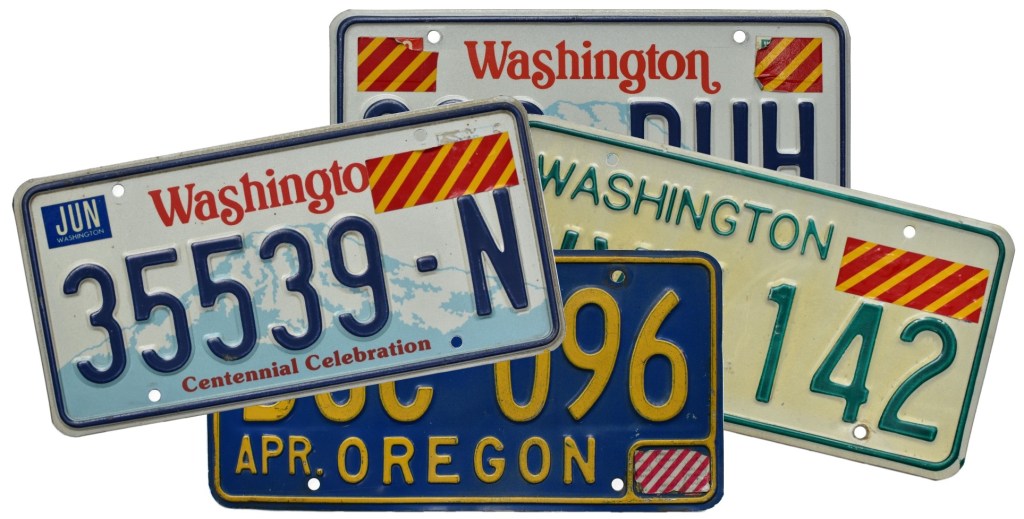
Probably a bit of a mystery to anyone not up to speed on motor vehicle laws, these unlabeled stickers were not a decoration; they were a scarlet letter signifying that the vehicle belonged to someone who’d committed driving offenses so egregious that police would need to “keep tabs” on them.
Washington state and Oregon both used this system concurrently in the late 1980s/early 1990s, although their approaches were somewhat different.
Washington’s Red-and-Yellow Striped Stickers
In mid-1988, law enforcement officers across Washington became armed with a new tool to combat driving scofflaws: a yellow-and-red sticker.
When House Bill 196, sponsored by Representative Seth Armstrong of Seattle, became effective on July 1, 1988, police officers across the state were authorized to confiscate a vehicle’s registration if the driver was caught driving with a revoked or suspended license. At the same time, the officer would place the yellow and red sticker on the license plate, covering the registration tabs.
At the time of arrest for a violation of [the law], the arresting officer shall confiscate the Washington state vehicle registration of the vehicle being driven by the arrested person. The officer shall mark the vehicle’s Washington state license plates in accordance with procedures prescribed by the Washington State Patrol. Marked license plates shall be clearly distinguishable from any other authorized plates.
House Bill No. 196, enacted May 1987
The law was a response to the growing problem of bad drivers, having already had their privileges revoked, flouting the law and continuing to drive anyway. Revoked-licensed drivers were involved in a notable amount of traffic accidents.
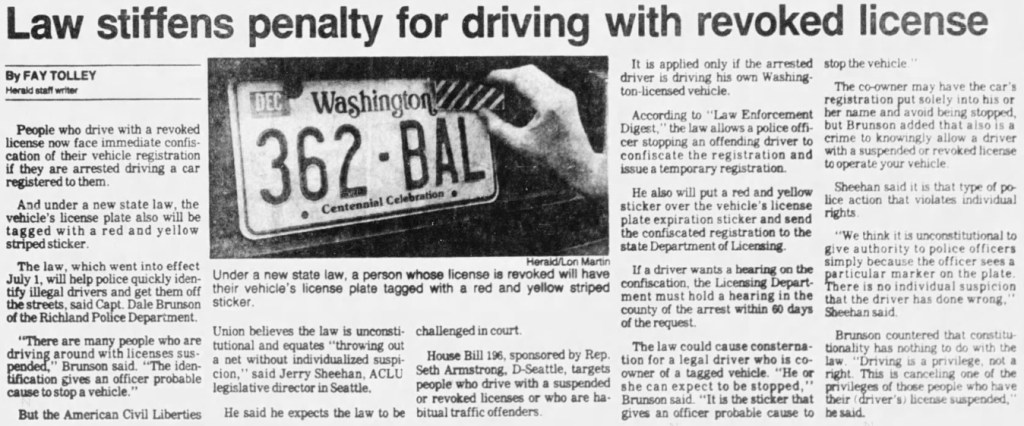
If a license-less offender was stopped and someone else in the vehicle had a valid driver’s license, that person was allowed to take over the wheel, but otherwise, the car would be impounded. When a sticker was applied to the license plate, a temporary registration would be supplied to the car, allowing others to drive it, although the Kitsap Sun noted on June 29 that “they’ll likely to be stopped fairly often by traffic officers who notice the reflective sticker, for a check of their licenses.”
The striped sticker on a license plate gave police probable cause to pull over the vehicle and ensure a properly-licensed driver was at the wheel (stickers could only be applied if the offending driver was also a registered owner of the vehicle). Predictably, this was highly controversial, with privacy and civil liberty advocates objecting to the idea that a driver could be pulled over at any time when outwardly complying with traffic laws – even a family member with a perfectly legitimate license.
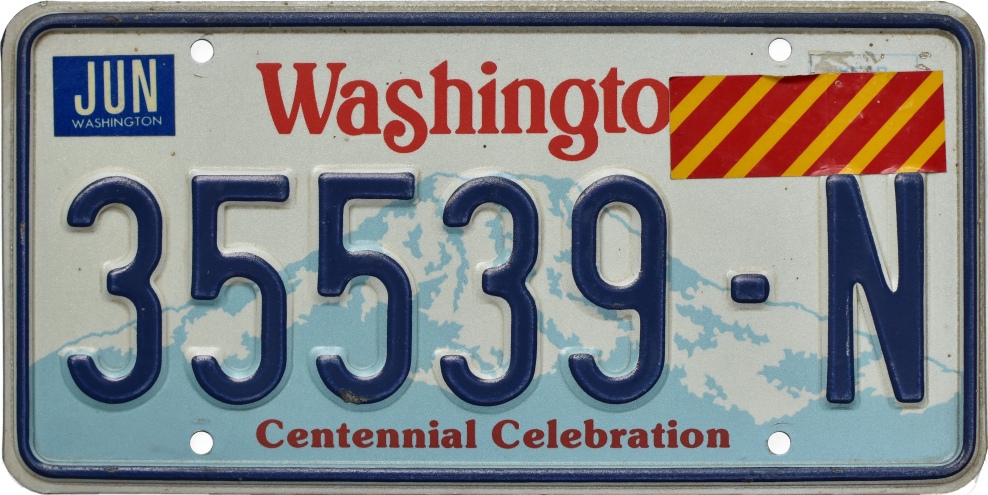
The stickers were large – designed to cover the month and year tabs that were adjacent to each other on the majority of license plates on the road at the time.
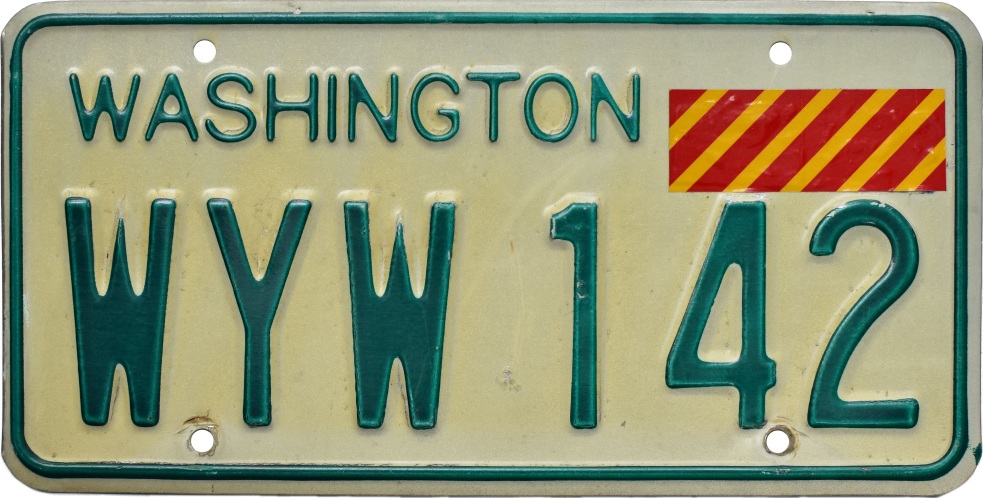
On the relatively new Centennial Celebration plates, the large sticker was usually applied over the year tab, but there was likely confusion over the intended application, as seen on this plate below where the officer cut the zebra sticker in two and covered both sides of the license plate.
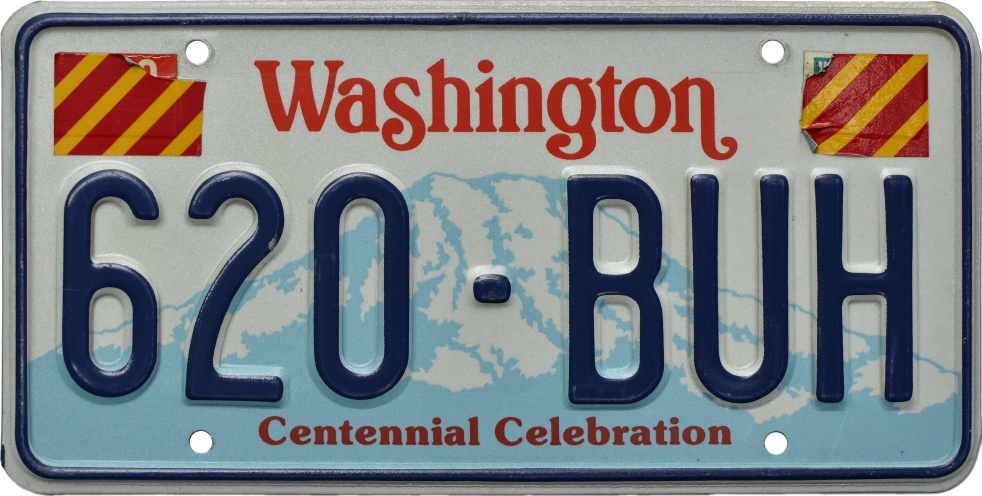
The Seattle Post-Intelligencer reported on September 16, 1988, that in the brief period since the law began on July 1, the Washington State Patrol had issued 1,300 stickers, and Seattle police had applied 50 to vehicles.
The law, signed by Governor Booth Gardner on May 15, 1987, had a clause that limited sections of it to five years (in particular, the portion including the stickers). The requirement to mark license plates expired on July 1, 1993. Its expiration was not widely noted in the press at the time, nor was the general effectivity of the program.
Oregon’s Zebra Stickers
A couple of years after Washington’s badge-of-shame sticker program started, Oregon joined in with its own stripes.
Starting January 1, 1990, drivers caught at the wheel with revoked or suspended licenses would also receive a conspicuous sticker. The black-and-white “zebra” sticker with diagonal lines was similarly placed over the year sticker of an offender’s vehicle. A subsequent report to the Department of Motor Vehicles would cancel the vehicle’s registration.
One difference from the Washington law was that Oregon law enforcement could sticker the vehicle even if the scofflaw driver wasn’t the owner. Like the Washington program, the sticker’s presence on a vehicle provided police with probable cause to pull over the car and verify the driver’s license.
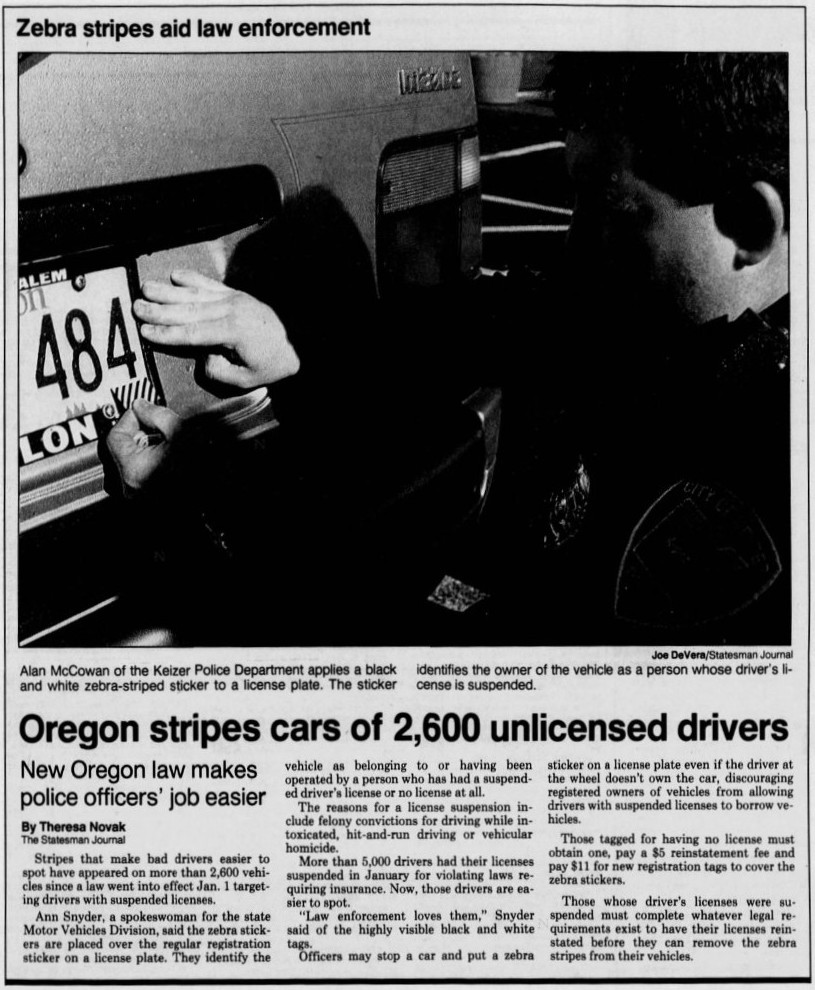
The badge of dishonor would be applied when citing a driver for felony driving with a suspended or revoked license, driving at all with a suspended or revoked license if the revocation had been due to a lack of legally-mandated liability insurance, or driving without a license (a license that had been expired for less than one year could skate through).
In 1990, 30,776 stickers were applied, according to a February 14, 1991 article in the Statesman-Journal.
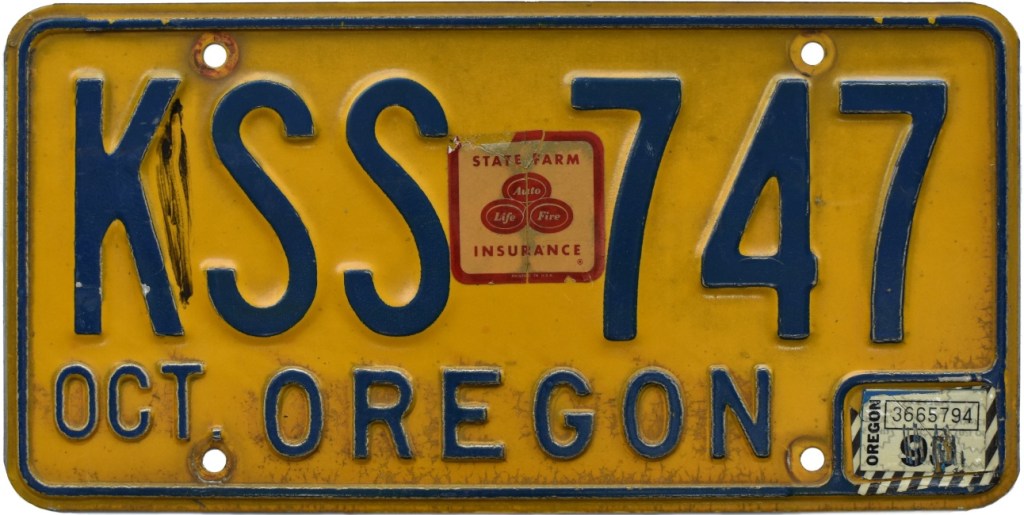
The 1990 law, similar to Washington’s, had a sunset clause that ended the program on December 31, 1993. It was not renewed by the legislature.
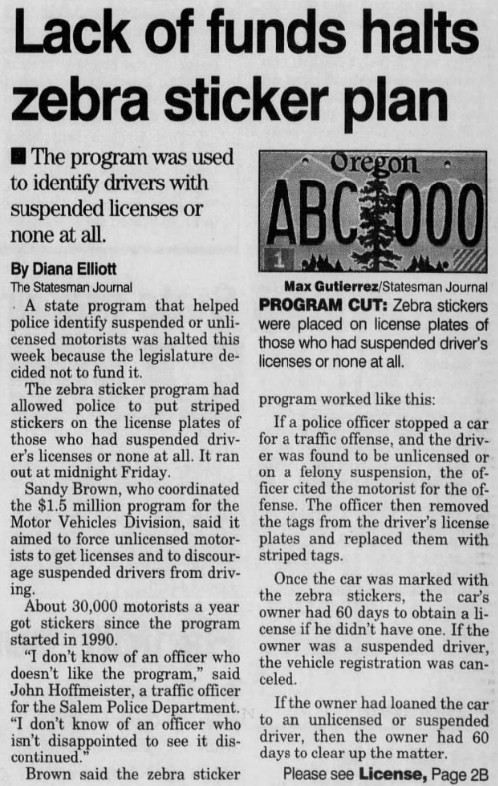
The City of Portland had its own cancellation program running concurrently, which was even more strict and resulted in the forfeiture of the vehicle – the city seized it and resold it if the infractions were not resolved.
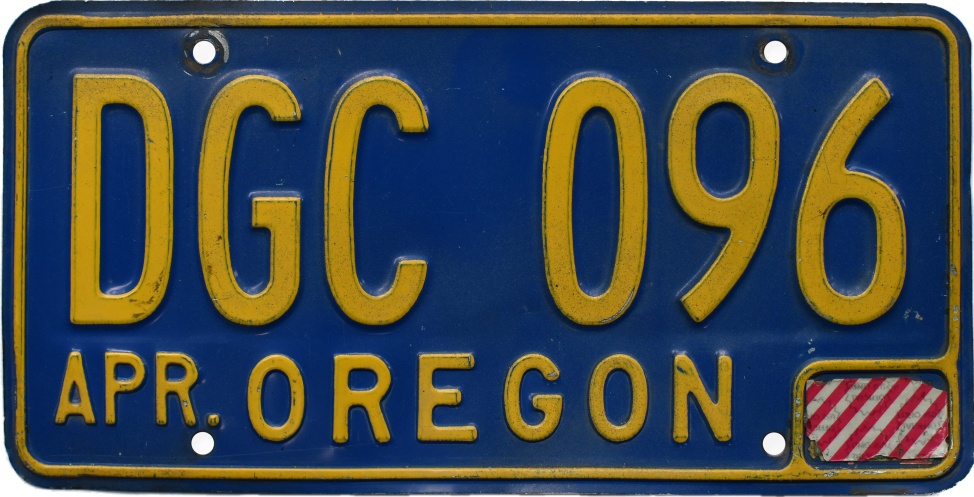
No shade! They mean business!
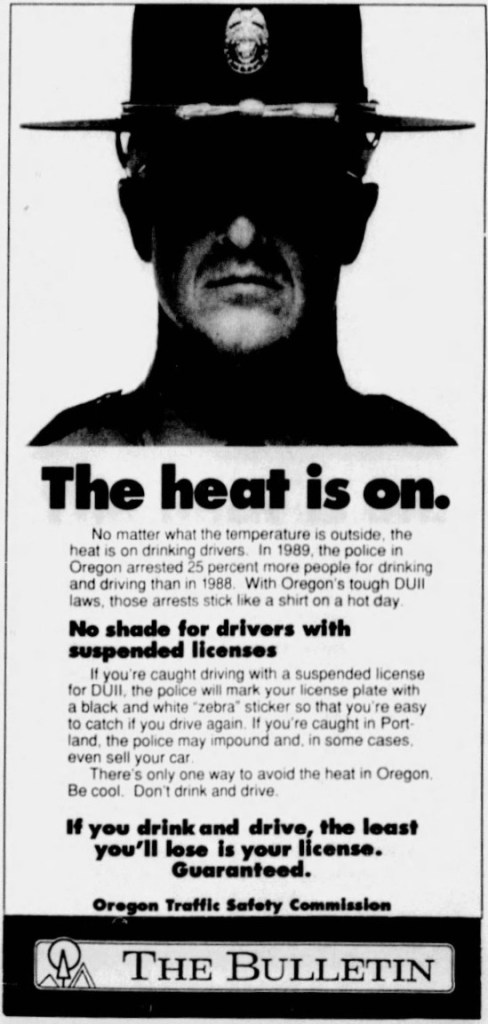
Drive safely and legally, everyone.
 Danny's License Plates