Starting in 2027, Washington state will officially have a license plate warranty to address common quality problems. Under new law taking effect January 1, 2027, a vehicle owner has the right to replacement license plates, free of charge, if theirs are impacted by manufacturing defects.
Such defects have been, unfortunately, somewhat common over the past decade. Quality issues such as delamination of the graphic sheeting results in some horrendously ugly, and frequently illegible, license plates.
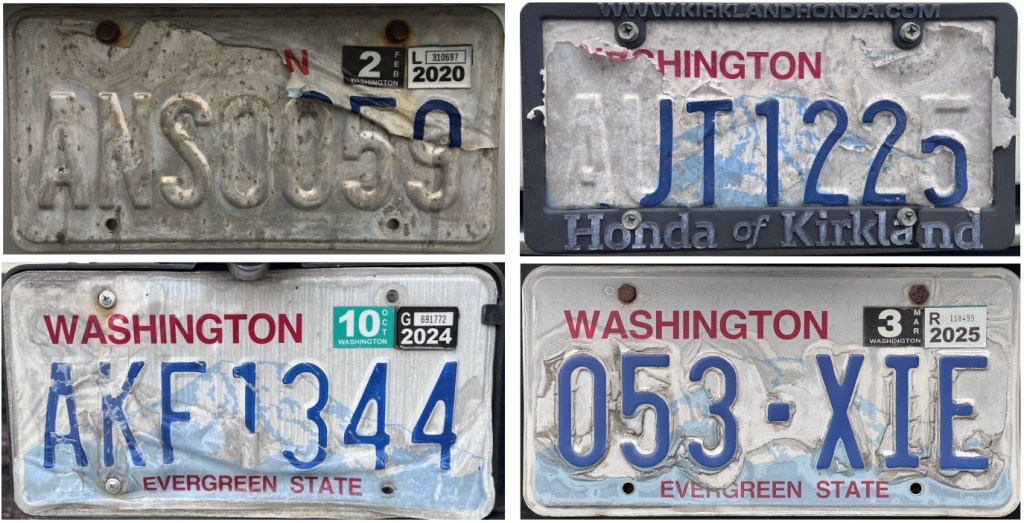
In March 2026, the state legislature passed HB 2114 (Concerning defective license plates issued by the Department of Licensing), with Governor Bob Ferguson signing it into law on March 24. Text of the House analysis of the bill explains the genesis:
This bill came about from a constituent who was pulled over for having a license plate in which the paint was peeling off. This individual went to the DOL to have the license plate replaced and found out there was no warranty for defective license plates. A post was made on Facebook, and hundreds of people commented that a similar situation had happened to them. Defective license plates seem to be more prevalent in Eastern Washington (WA). This bill is a good customer service bill that is responsive, reasonable, and fair.
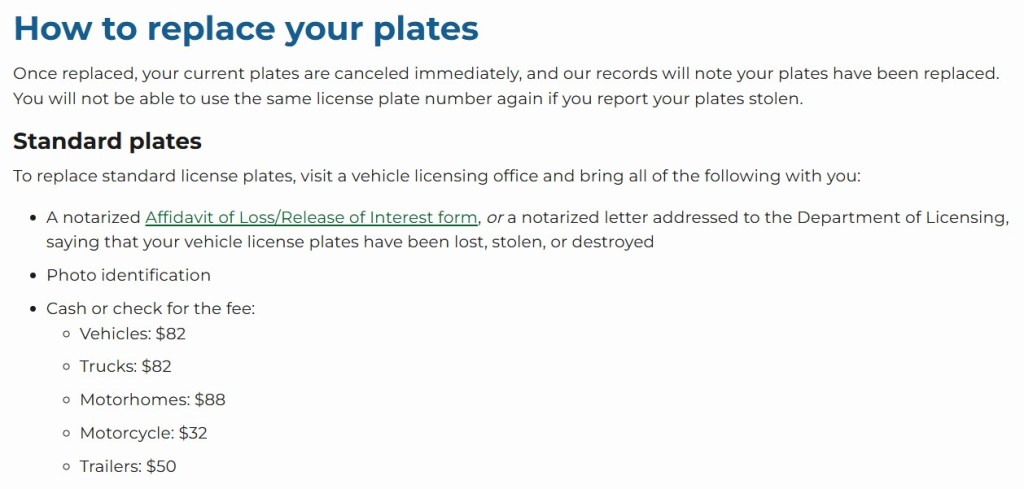
Before the new law, any vehicle owner has been able to request a new license plate, but is required to pay a fee to do so, with another $20 to have the same number retained. Many people were understandably upset having to pay to replace defective license plates. The new law waives any fees if the license plate is sufficiently illegible and if a request is made within two years of issue (after two years, the Department of Licensing has leeway on whether the fee should apply).
License plate quality in general has regressed in the 15 years. Aside from the delamination issue, an epidemic of what is often referred to as “3M disease” has plagued license plates all across North America, which results in ugly graying of the graphic sheeting, often with vertical lines appearing all across the license plate. This has been extremely common on reflective sheeting from 3M, which is ubiquitous.
There is some irony that Washington’s unloved seven-year rolling replacement law, which was created to avoid long-term reflectivity loss in the sheeting, would have been useful in addressing current aging issues. That program, which purported to solve a problem that didn’t really exist at the time, ended in 2014.
Early Defects in Washington License Plates
Embossing a metal rectangle and slapping some paint on it sounds simple, but there have been manufacturing difficulties from the earliest years. The Seattle-based Pacific Coast Stamp Works, which made Washington state’s license plates for 1917 through 1919 (and some 1920 issues), didn’t leave a lasting legacy of high-quality paint on its products.
The 1919 issue presented major defects right out the gate. The paint did not dry sufficiently, causing the paper wrapping to stick to the plates. The issue was so bad that the state required the company to repaint defective plates. The public was called on to ship any unsatisfactory plate back for refinishing.
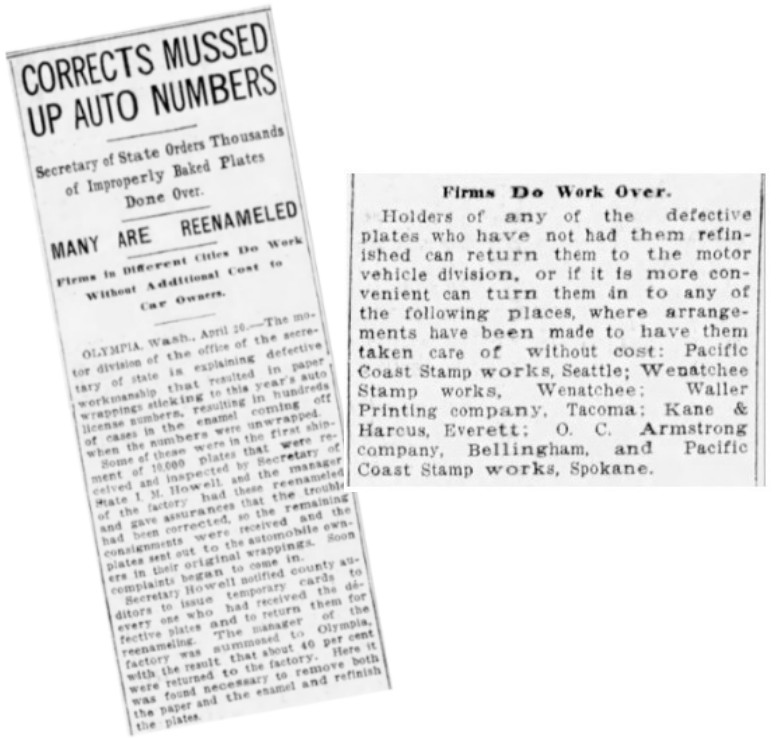
Even today, it is not uncommon to find bits of paper envelopes stuck to the license plates of the era.
Impacts of Aging
Modern license plates are designed for years or decades of use, but in the first half of the 20th century it was uncommon in the United States for plates to spend more than a year on a vehicle. Metal shortages during World War II presented some of first longevity challenges. With metal supplies constrained to support the war effort, states had to find alternatives to stamping out fresh new license plates each year.
In Washington State, the 1942 issue, already manufactured at the time of the Pearl Harbor attack, ended up in use for three years instead of one. The state would not be able to supply a general reissue until 1945, with windshield stickers used in 1943 and 1944 to extend the plates’ validity.
The years took their toll on the plates.
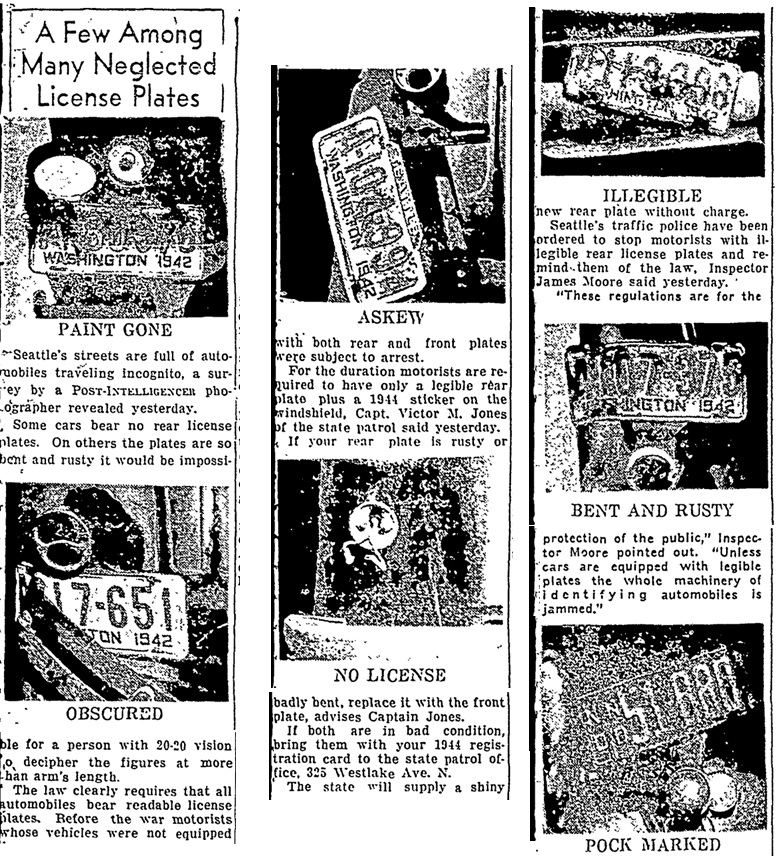
Predictably, battered and worn license 1942 license plates were a common sight on the roads by the time the war started winding down. With some metal available to manufacture 1944 license plates (primarily for issuance to new registrants), Washington state did allow existing registrations with severely damaged or aged plates to apply for a new 1944 plate as a replacement, and the Seattle Post-Intelligencer reported on May 23 of that year that the Washington State Patrol was actively ticketing motorists with illegible plates, compelling them to get a new 1944-dated issue.
Postwar attempts to save costs and avoid pricing and supply issues with metal led many states to create multi-year baseplates. Washington adopted this practice with its 1950 issue, which was designed with slots for annual renewal tabs. Over the course of the four years they were used, many of these soft aluminum plates were battle-scarred, with bent edges and torn bolt holes. The green number paint was particularly weak and wore off frequently.
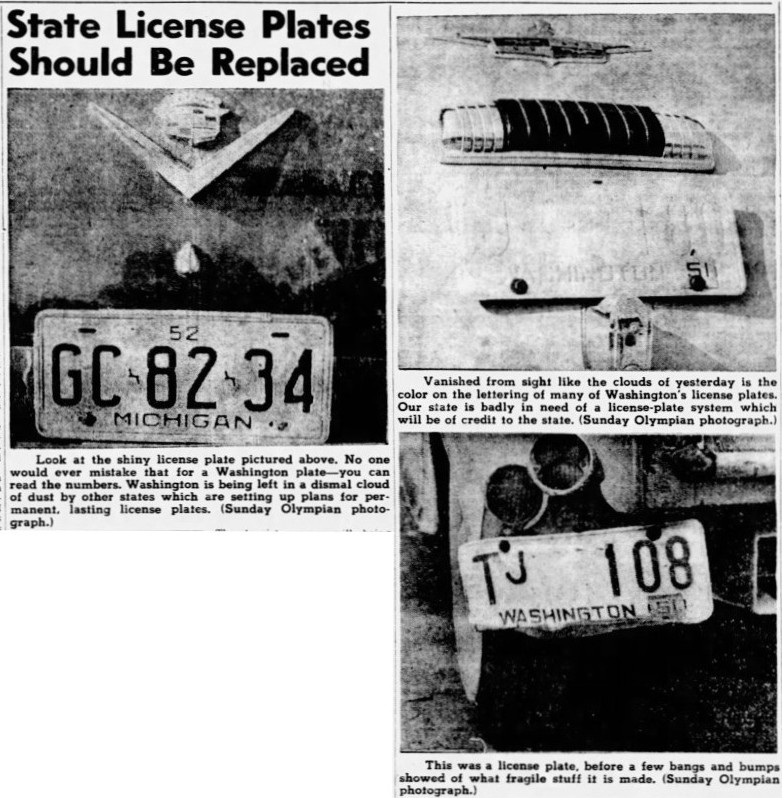
In a parallel to today’s problems with sheeting, the state stepped in to address the problem. At the end of September, 1952, newspapers across the state began reporting that the Department of Licensing would provide replacement plates, free of charge, for any that were “beaten, battered, or otherwise illegible.” An approval slip from the Washington State Patrol was required, which a motorist would obtain either from a trooper citing an illegible plate, or through a request at an office. Director of Licenses Della Urquhart was quoted that the state expected to issue 100,000 replacements at a cost of $15,000.
Voluntary Replacement
Vehicle owners have always been able to replace damaged plates by paying a (historically nominal) fee, either receiving a new set with the same number (upon request and after an additional fee), or a brand-new, off-the-shelf number.
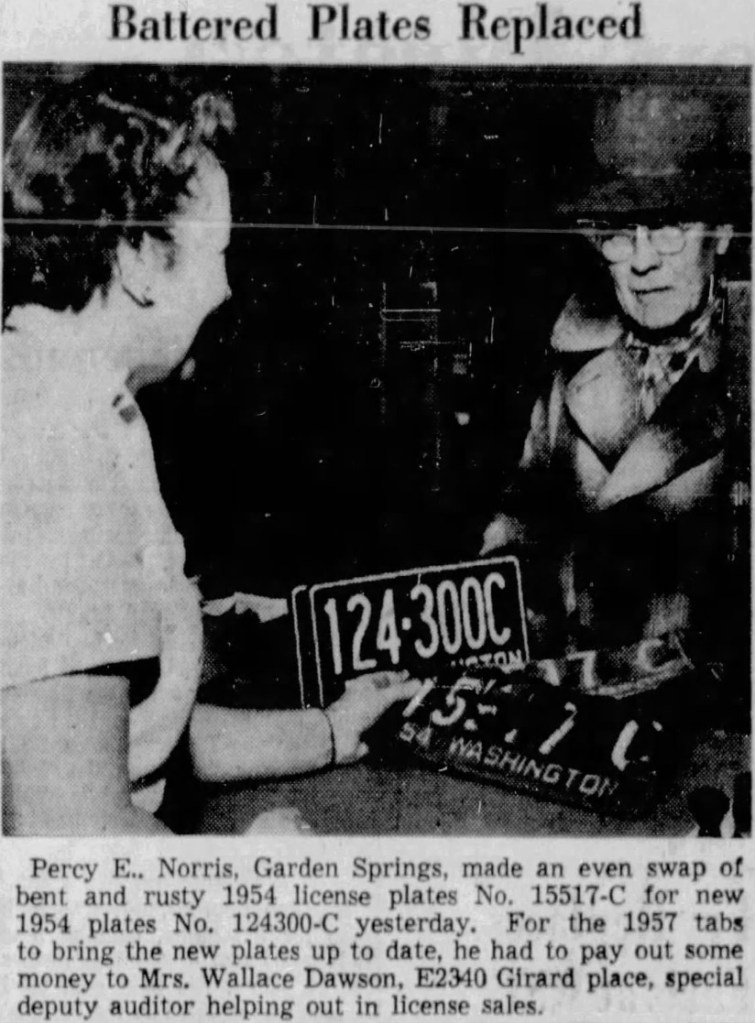
Under Washington law today, any change in vehicle ownership requires a new set of license plates to be issued, so someone buying a used car won’t be inheriting a falling-apart plate.
People sticking with the same vehicle long-term now are no longer stuck with a deteriorating license plate, at least starting in 2027.
 Danny's License Plates