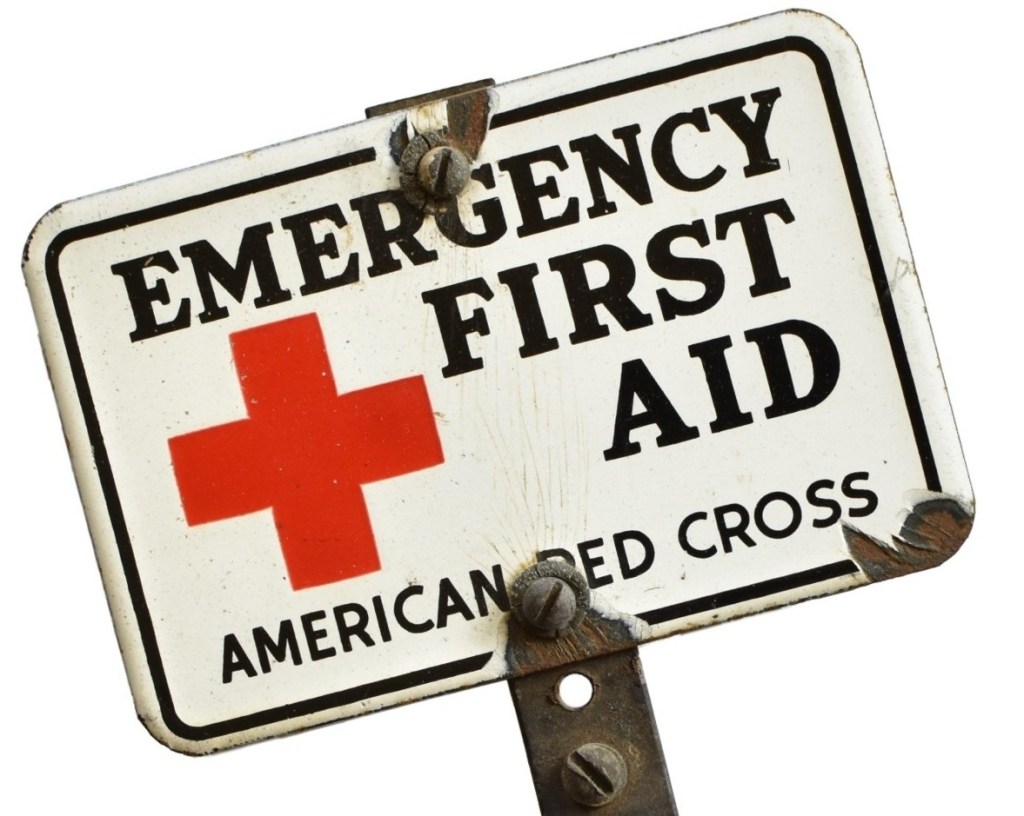
“The state of Washington is backing whole-heartedly the American Red Cross in its nation-wide crusade to save lives by reducing the number of accidents on our public highways,” Governor Clarence Martin announced in December 1937.
With an admirable focus on public safety and education, that enthusiastic backing had already resulted in 77 Red Cross first aid stations placed across Washington state and more than 50 mobile first aid units on board State Patrol cruisers, Border Patrol vehicles, and school buses.
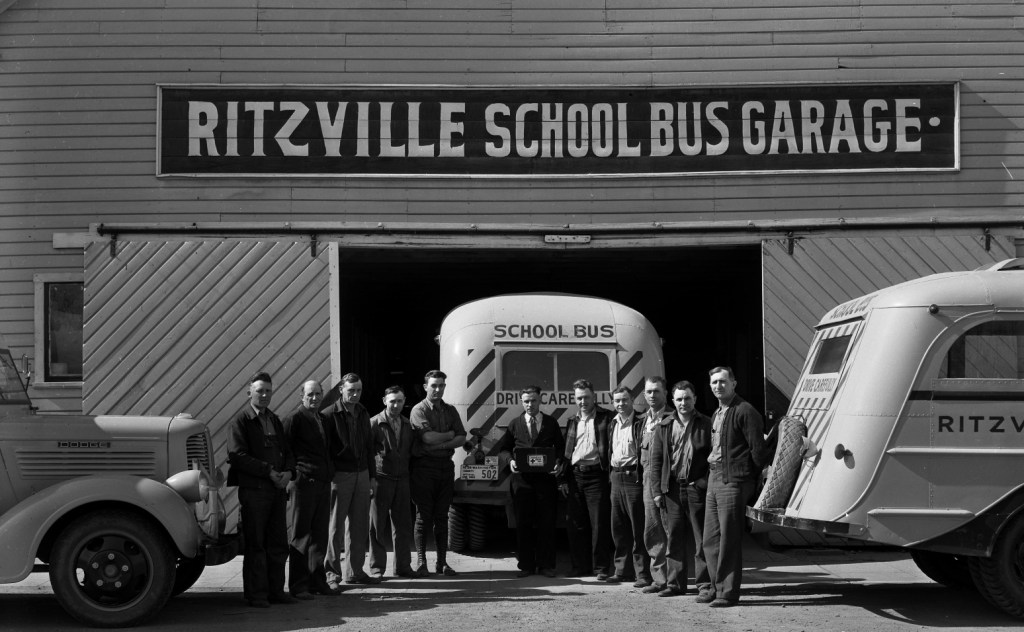
One school bus in particular was used for a promotional photo of the Red Cross first aid campaign:

In eastern Washington, the Ritzville Consolidated School District orchestrated a small ceremony sometime in 1938 to mark the addition of these first aid kits on their buses, with this detailed surviving photo providing a glimpse of the kits, the bus fleet, and the proud drivers.
Not only did the buses carry first aid supplies; they also prominently alerted the public to this safety resource with striking porcelain license plate toppers.
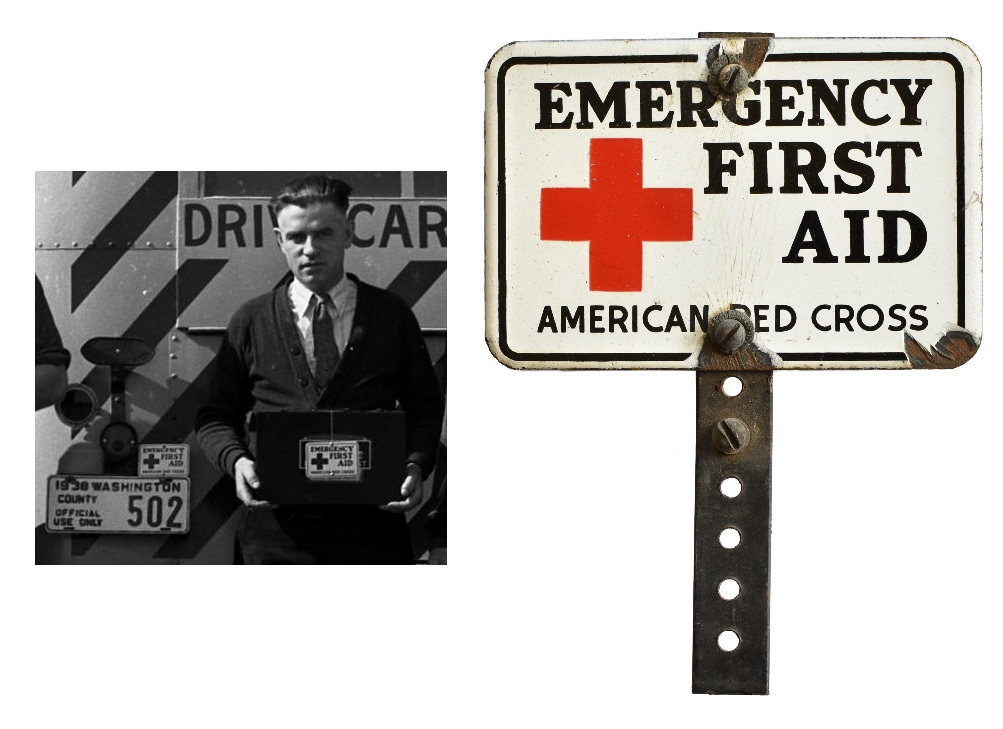
The Daily Olympian further explained in its December 1937 coverage of the Red Cross program that, “with the state police well trained, highway maintenance crews now taking advanced courses, school bus drivers being trained and schools offering instruction, this state is making rapid progress in the matter of safety.”
The campaign was national. Earlier that year, the director of the Red Cross First Aid Service, Harold F. Enlows, reported that nearly 1,500 first aid stations had been established, in all 48 states, with more than 3,000 still pending, according to the Carrollton [Missouri] Daily Democrat (March 23, 1937), which went on to elaborate that “the personnel and crews of these posts and mobile units are trained by the Red Cross in first aid, and know what to do in an emergency while the doctor is on the way.”
Large porcelain signs of a similar design were displayed at highway stops across the state (and nationally) to mark locations with first aid supplies available to travelers.

The License Plates
Front and center in the Ritzville school district photo is a prominently-displayed 1938 Washington license plate. A 1938 Washington license directory, published by the Motor List Company of Seattle, survives in my collection and provides more information on the bus most prominently featured in the photo from the Ritzville school district.
Public school buses in Washington state are issued license plates in the exempt vehicle class (for government-owned vehicles exempt from taxation). In the 1930s, there were four exempt classes: City, County, State, and Misc/U.S. Government. School buses are registered in the County Exempt category, and in the late 1930s received license plates with a COUNTY OFFICIAL USE ONLY designation spelled out at left.
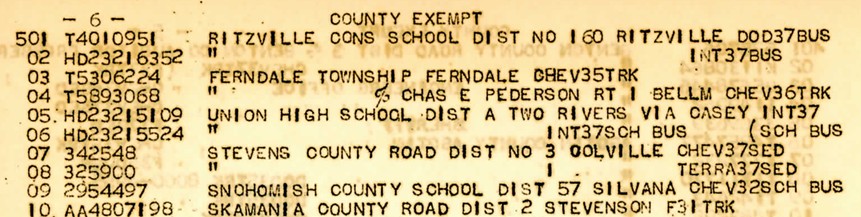
County Exempt plate number 502, pictured on the bus in the center of the photo, was, unsurprisingly, registered to the Ritzville Consolidated School District No. 160. The bus was a 1937 International.
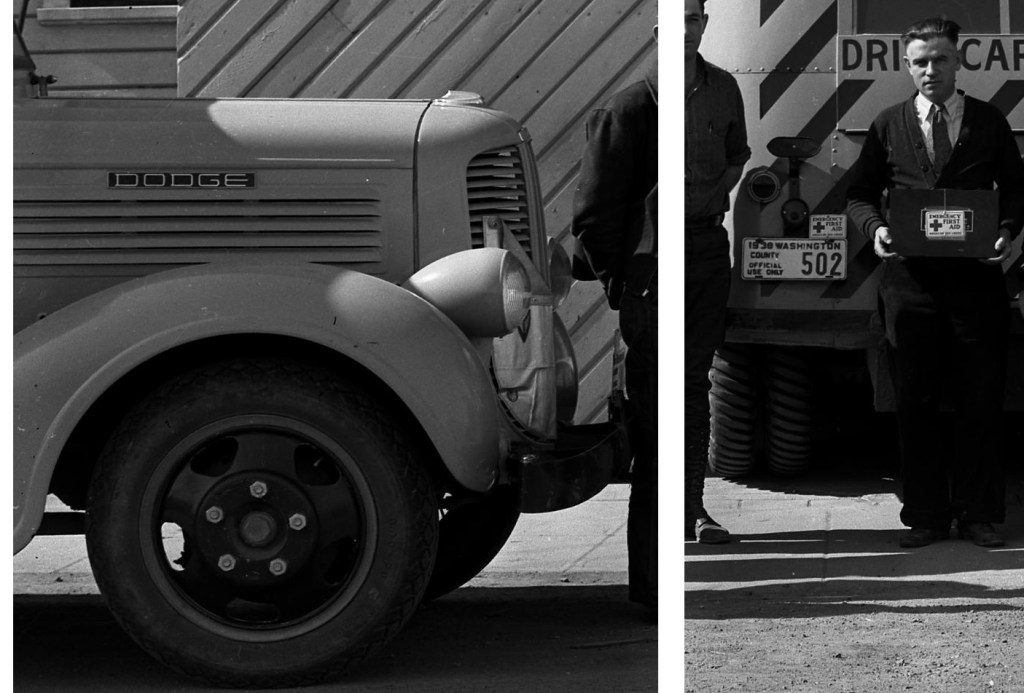
Plate 501 is (barely) legible on the front of the bus at the left of the photo (also sporting a Red Cross topper), with the hood badging confirming the directory’s listing as a 1937 Dodge bus.
The three buses pictured in the first aid ceremony were only a portion of the those serving the Ritzville Consolidated School District.
Ritzville’s School Buses
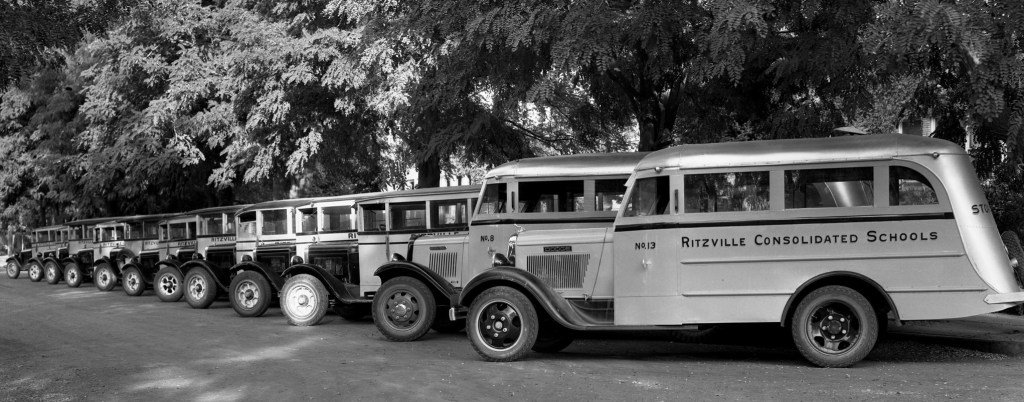
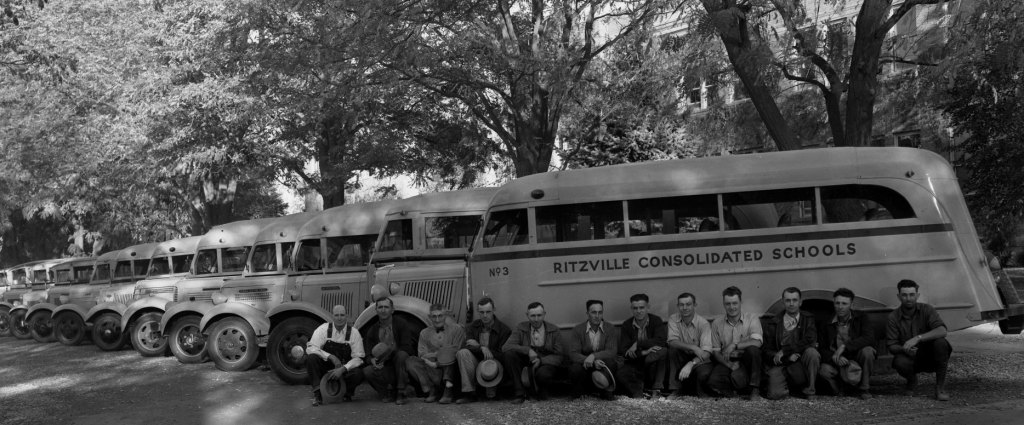
Adams County was proud of its school bus fleet, posing it for professional photos on many occasions. High-resolution copies survive in the Washington State Archives’ AM Kendrick collection, which show the evolution of the fleet during the 1930s and 1940s:


By 1948, one would presume first aid kits continued to be available on board, but the use of porcelain Red Cross toppers appears to have been discontinued, as none appear in the final photo from the series:
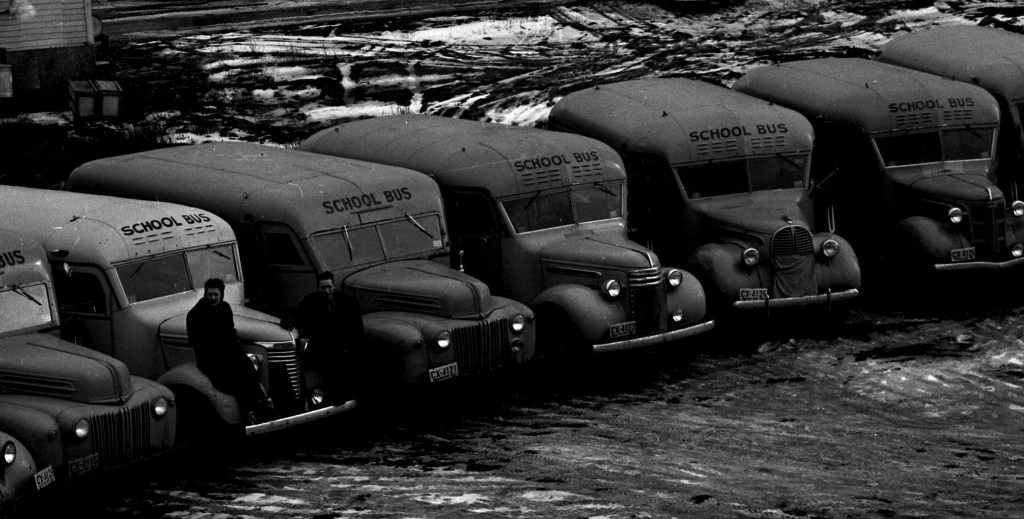
How long did the toppers last? Did anyone bother to reattach them when the original 1938 plates were swapped for ’39s? The plates and buses had all changed since the ceremonial photo; after the initial hype, perhaps nobody saw the need to advertise medical kits were onboard.
 Danny's License Plates