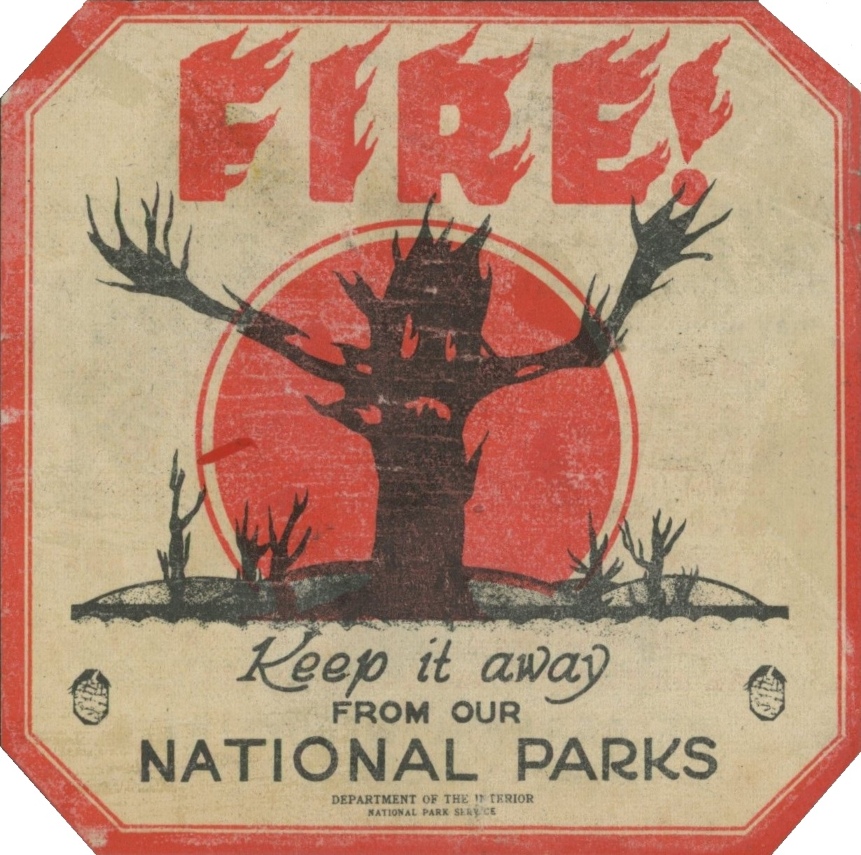
Anyone looking for a boost of patriotism or an inspiration for adventure would be well-served devoting multiple nights to watching Ken Burns’ The National Parks: America’s Best Idea, a series that tells the story of the creation of the U.S. National Park Service.
There is nothing so American as our national parks… The fundamental idea behind the parks… is that the country belongs to the people, that it is in process of making for the enrichment of the lives of all of us.
Franklin D. Roosevelt
America’s 63 National Parks (and 433 [current] park service units, which include National Monuments, National Historic Sites, National Recreation areas, etc.) are easy to take for granted, but their existence resulted only from the dogged determination of forward-thinking individuals and groups, often fighting against powerful interests that lobbied hard to allow (almost)-unthinkable actions like mining the Grand Canyon or cutting down the old-growth Olympic rainforests for cheaper lumber.

A constant tension has always surrounded the parks, searching for the right alignment between easy access for the public enjoyment and the need to conserve nature and history. The automobile is inextricably linked to many, if not most, national parks. The Great American Roadtrip would be incomplete without bison-caused traffic jams in Yellowstone, traversing Going-to-the-Sun Road in Glacier National Park, driving all the way to the edge of the Mt. Rainier Snowfields, or circumnavigating Crater Lake.
Below is a very incomplete overview of some of the artifacts the National Park Service has left the world of automobilia.
National Park Official License Plates
From the earliest years, the National Park Service issued its own special license plate series, made of porcelain. These debuted with the legend “U.S. N.P.S.” left of the registration numbers, and in later years bore “U.S.D.I.” at left with “National Park Service” along the bottom.
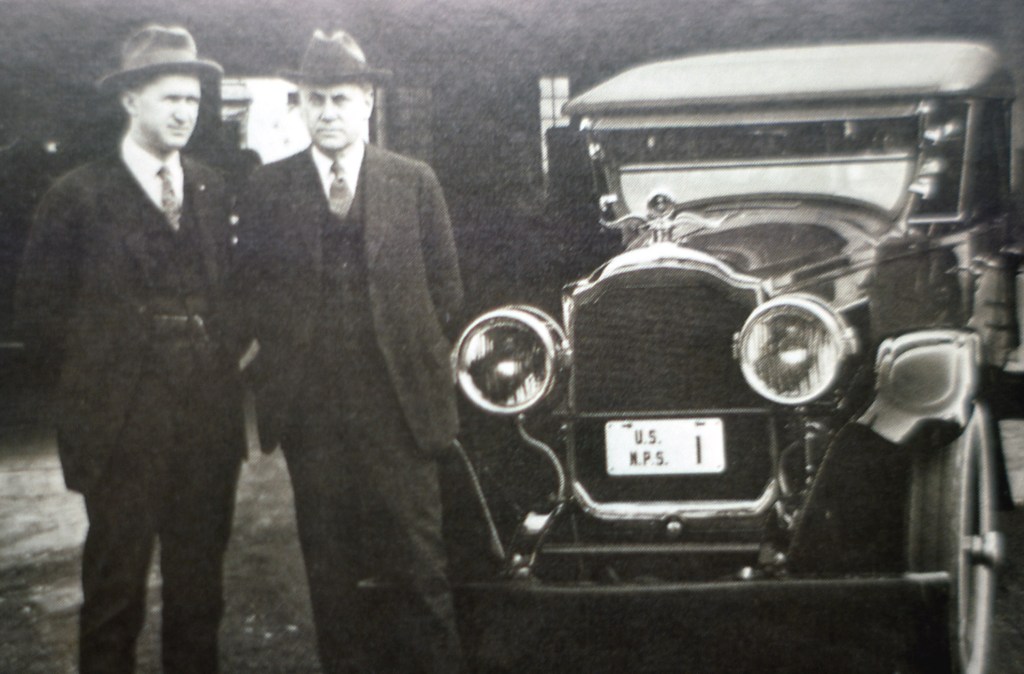
The most striking of these is plate #1, which was issued to the director of the National Park Service, Stephen Mather and later Horace Albright.

The Parks themselves sometimes issued their own license plates to register concessionaires. The most iconic of these are the giant Yellowstone Park license plates from the 1920s, which were issued in relatively large numbers to the classic yellow tour buses.

Many of Yellowstone’s iconic buses are preserved by Buses of Yellowstone Preservation Trust, and restored versions drive tourists around the park today. These wear regular-issue Montana license plates with modern replicas of the historic yellow Yellowstone Park plates.

Tour buses in Mt. Rainier National Park similarly used special park-issued license plates from the 1930s through the 1950s (read more about the buses, cars, and licenses of Mt. Rainier National Park).
Made of porcelain with “Public Utility Operator” spelled at left, these match formats also known to have been used in Yosemite and Yellowstone, and were made available to concessionaries in the western national parks in March 1931.

Down in California, Yosemite National Park issued special license plates for vehicles operating inside the park. The first shown below probably dates from the late 1950s, based on stamping dies that appear to match Washington, DC’s license plates of the era. The second is of unknown origin, but made of a much cheaper and more fragile thin aluminum.


After the federal government standardized its vehicle licensing with its own U.S. Government series during World War II, vehicles belonging to the National Park Service have been issued U.S. Government license plates with an “I” prefix, denoting the Interior Department.

National Park Windshield Stickers
In the 1920s, as the automobile became ubiquitous and road systems improved, the personal freedom and adventure of the road trip became the cat’s pajamas. As Americans took to the roads to see their country, National Parks were a natural itinerary-maker. In 1926, Mt. Rainier National Park, way up in the northwest corner of the country, welcomed vehicles from every U.S. State and 21 foreign countries – not an easy or “along-the-way” journey for most.
One of the more popular souvenirs in the early 20th century was the windshield stickers issued as receipts for entrance fees (read more on the NPS history here).

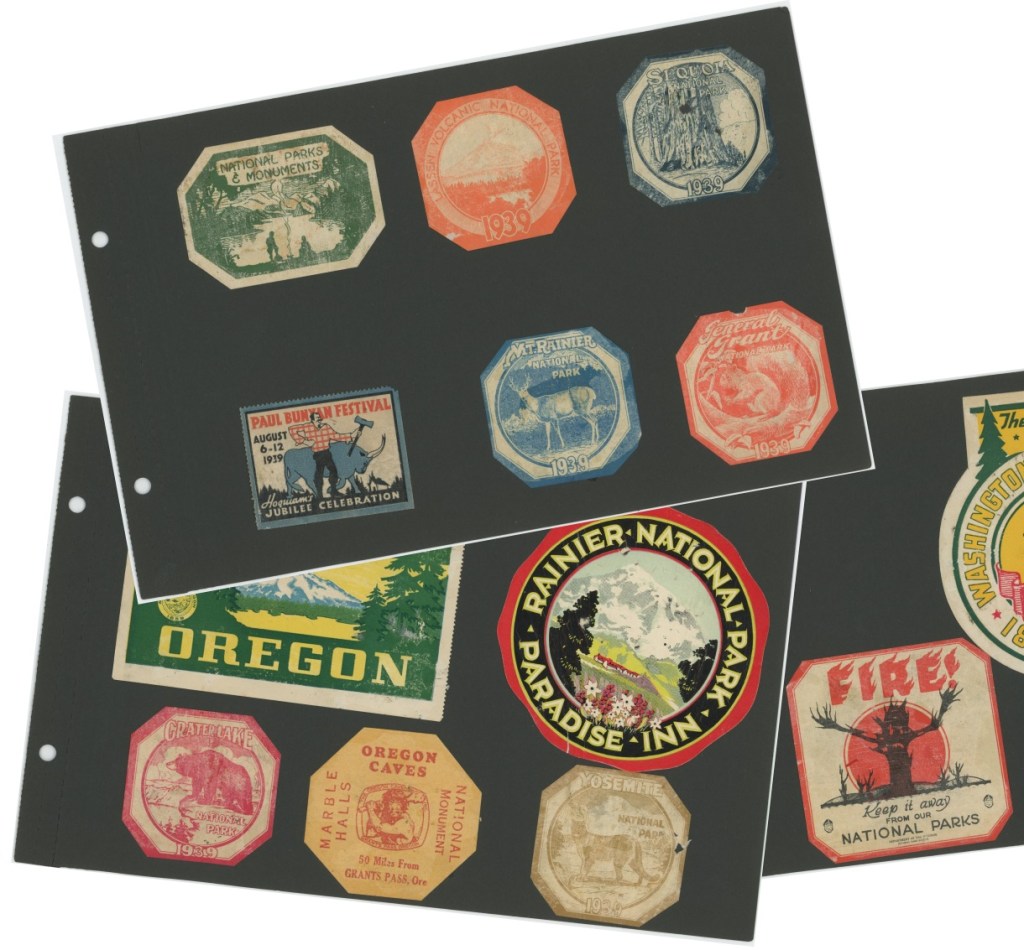
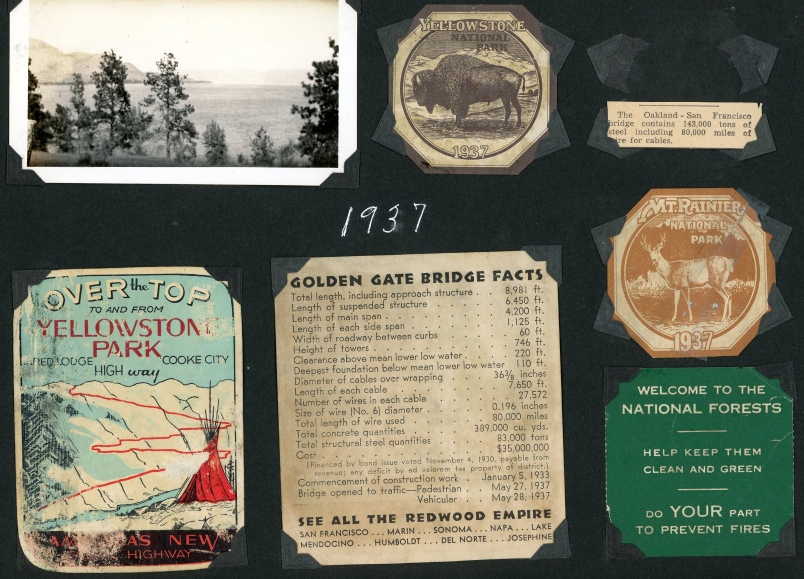
A more colorful form of souvenir than today’s National Park passport stamp program (get yours; they’re a fun way to inspire travel to meaningful places across the country), they are commonly seen on the windshields of cars in old photographs, and they were often saved in photo albums and trip journals.
Park Rangers
Having personally visited half of the U.S. National Parks, without exception, every interaction with park rangers has demonstrated their professionalism, passion for their work, and caring stewardship of our historical and natural treasures.
The National Park Service today exemplifies one of the highest traditions of public service
Stewart Udall, U.S. Secretary of the Interior
Some photos below of National Park rangers at work:


Supporting National Parks in Washington State
Here in Washington State, we are lucky to have three National Parks: Mt. Rainier, Olympic, and North Cascades.
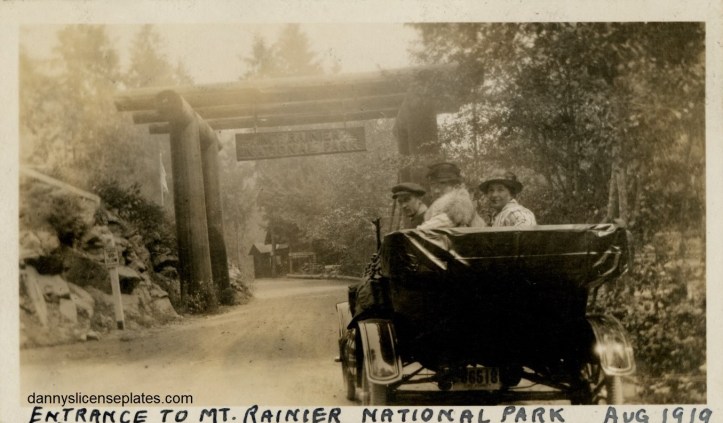
Different approaches to the age-old debate surrounding public access and development versus leaving land untouched are exemplified by Washington’s parks. Mt. Rainier National Park was an extremely common destination for car-based tourism as early as the late 1910s, and transportation around the park is largely dependent on autos. When Olympic National Park was created in the late 1930s, officials intentionally kept cars out by limiting roads to sites like Hurricane Ridge, on the very edge of the park. North Cascades was split into two units to allow one single highway to cross through the wilderness without violating the park itself, but still giving motorists exposure to the natural beauty (the book Windshield Wilderness by David Louter gives an interesting history of how cars impacted the development of Washington’s parks).
Washington motorists can support our parks with the National Parks license plate, which supports Washington’s National Park Fund.

National Park Service Items Wanted
As a dedicated fan of the National Park Service (having visited half of the National Parks and more than a quarter of all units in the National Park Service, with the memories, education, and passport stamps to prove it), the licenses and automobile-related ephemera overlap naturally with my passion for license plates and automobile licensing ephemera.
I am always looking for the following items – please contact me if looking for a home for the following:
- US NPS porcelain license plates
- USDI National Park Service porcelain license plates
- USDI State E.C.W. porcelain license plates
- Mt. Rainier National Park Public Utility Operator porcelain license plates
- Yosemite National Park Public Utility Operator porcelain license plates
- Yellowstone National Park Public Utility Operator porcelain license plates
- National Park Automobile Permits
- National Park windshield decals, pasters, or stickers
Go out and enjoy America’s heritage!
 Danny's License Plates