On the morning of September 10, 1953, the license plate production building at the Washington State Penitentiary in Walla Walla was a smoking ruin, filled with the scorched remains of almost all of Washington state’s recently-completed 1954 license plates. Was it arson? An escape attempt? How would the state replace the lost license plates, and from where?
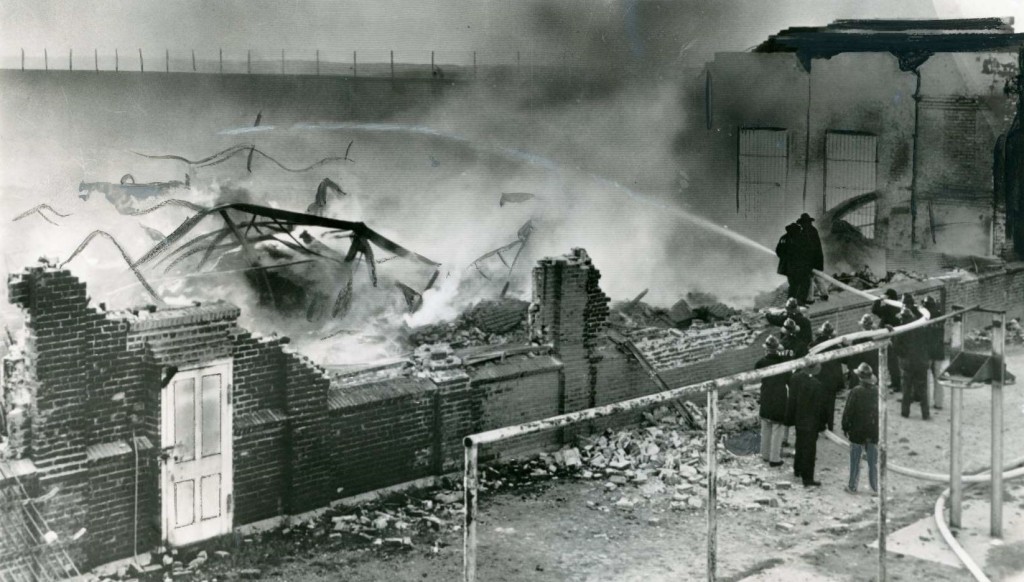
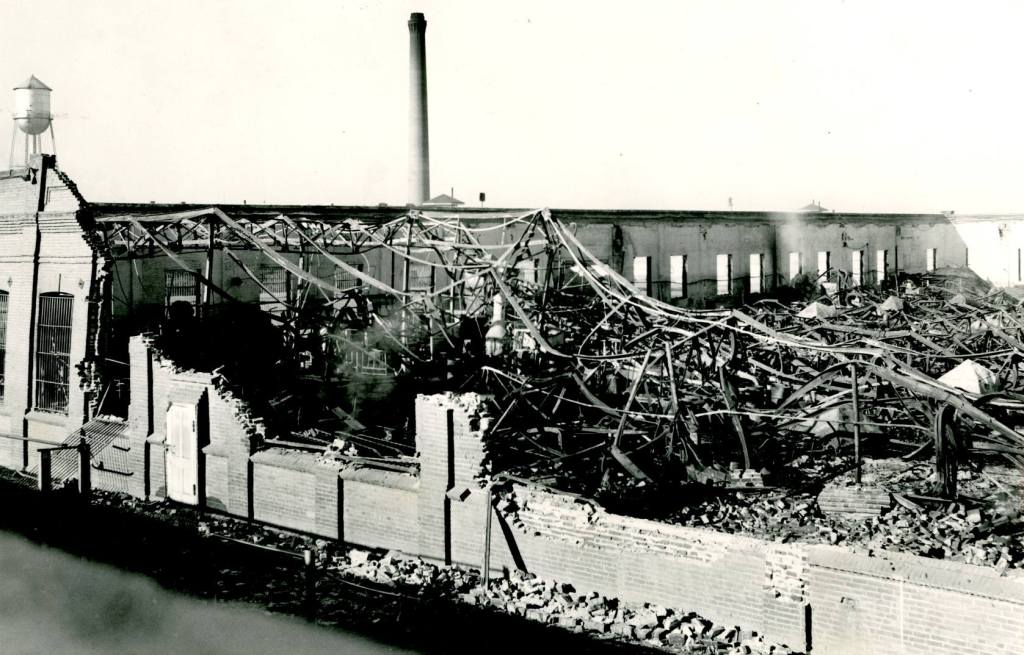
The destruction of the license plate mill ended a 30-year era of continuous license plate production at the Walla Walla penitentiary. It would be another four years before production would resume at the prison, with plates sourced from out of state in the interim period.
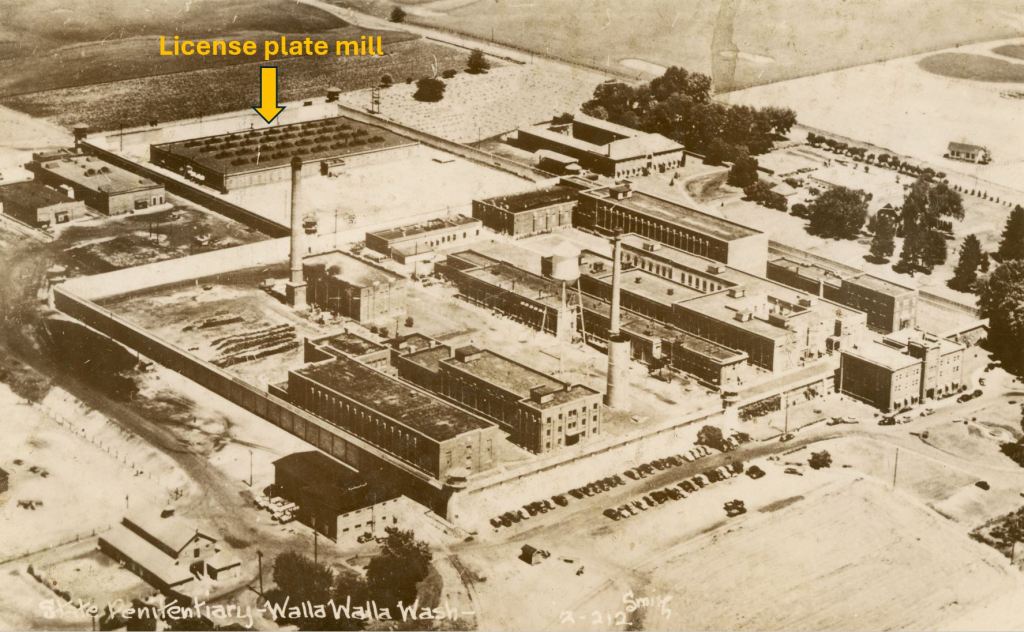
When the fire started around 4pm on September 9, approximately 700,000 1954 Washington license plates were on hand. The plant had recently completed production of the 1954 license plates, to be issued to every vehicle in the state in January, and continued to make plates for the current period as demand warranted.
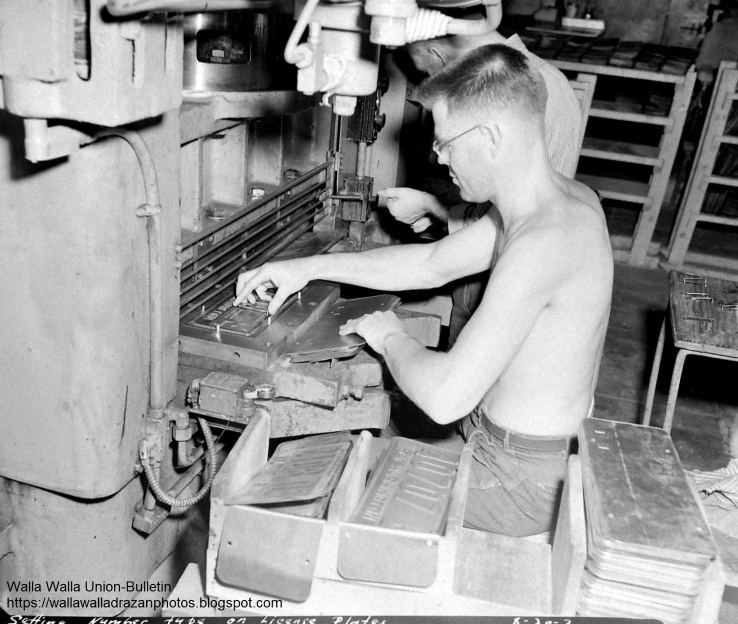
Every license plate on hand was destroyed. All the equipment to produce to new ones, gone.
Search for Alternative Suppliers
The scramble to find a new supply of license plates for 1954, and for remaining demand in the last few months of 1953, started immediately. Luckily, there were many options available.
By the morning after the fire, the state already had leads. “Acting Governor Emmett Anderson said a Boston firm has notified the state it can provide up to 10,000,000 plates within 60 days. But he didn’t know how much the firm would charge” (Spokane Chronicle, September 10, 1953). Two days later, state motor vehicle administrator A.J. Thomas, visiting Spokane, told the Spokesman-Review that the state had leads on private suppliers in Oregon and Kansas. The very next day, it was reported that the state had “completed negotiations with two private plants in Oregon and the department of corrections in California to complete the plates.”
As interesting as it would have been for Washington license plates to be manufactured at the famed Folsom Prison, that arrangement was never finalized. Within the week, one sole private company in Oregon would be awarded Washington’s license plate business for the next several years.
Screw Machine Products Co wins the contract
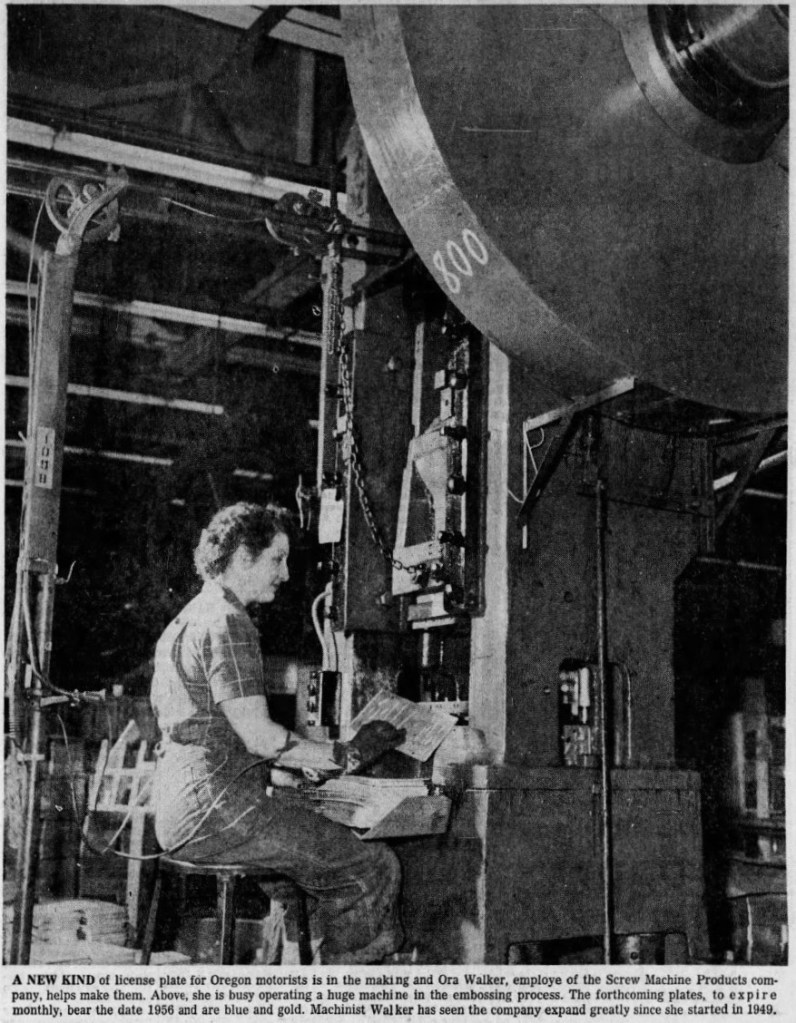
Less than a week after the fire, the state had secured its supply of license plates without having to stray too far outside the state’s borders. The Screw Machine Products Company of Portland, Oregon, was the winner of Washington’s business, adding another state to its license plate manufacturing portfolio.
The State of Washington Monday ordered nearly 1 million license plates to replace those destroyed in the fire at the state penitentiary last week.
The contract went to the Screw Machine Products of Portland, which also make Oregon and Hawaii license plates.
H.F. Pike, supervisor of the State Division of Purchasing, said the plates will cost 16 cents each delivered to the counties.
That is 1 cent per plate more than the penitentiary was to have received for the job, he added.
Pike said the new plates will be made of aluminum which, he said, is better than the steel from which the old plates were made.
The company has guaranteed to have sufficient license plates completed and delivered so motorists will be able to begin purchasing them January 1 as scheduled.
The Portland firm will also begin immediately to manufacture 1953 license plates to take care of shortages in some counties, Pike stated.
In order to assure delivery of them in the shortest time possible they will be made with dies used for Hawaiian and Oregon plates which the company already has on hand. Delivery to counties in need will begin within a few days, Pike said.
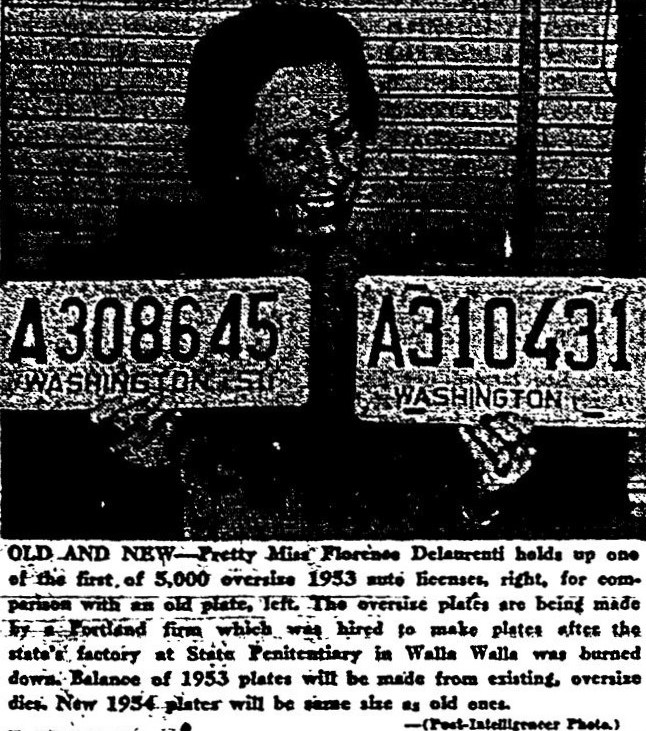
The 1953 plates, which will be used for new cars and cars brought in from other states, will be slightly larger than the present Washington plates and will have Oregon-type numerals.
Seattle Post-Intelligencer, September 15, 1953
The Screw Machine Products Company was a relative newcomer in the license plate business, but a (briefly) successful one. Four years prior, it had snatched Oregon’s business away from the long-established and prolific Irwin Hodson Company, at the same time winning the contracts for Alaska and Hawaii, other longtime customers of Screw Machine’s Portland neighbor. At the time of the fire, the company also had the business for Arkansas in its portfolio (the company’s success in the early 1950s, frequently won by underbidding the competition by a significant margin, was a bit of a Pyrrhic victory, as the company went bankrupt and was liquidated in January 1958).
Late-issue 1953 License Plates
In response to the pressing demand for license plates for the current licensing year, Screw Machine quickly threw together a design that loosely resembled what Washington currently had on the road.

In 1953, the license plates on Washington cars, trucks, and other vehicles dated back as far as 1950, having been renewed for 1953 with metal tabs. To fill demand for new registrations in the remaining three months before the 1954 plates debuted, Screw Machine used steel blanks originally intended for Hawaii’s 1952 plates and stamped registration numbers using the number dies from Oregon’s license plates.
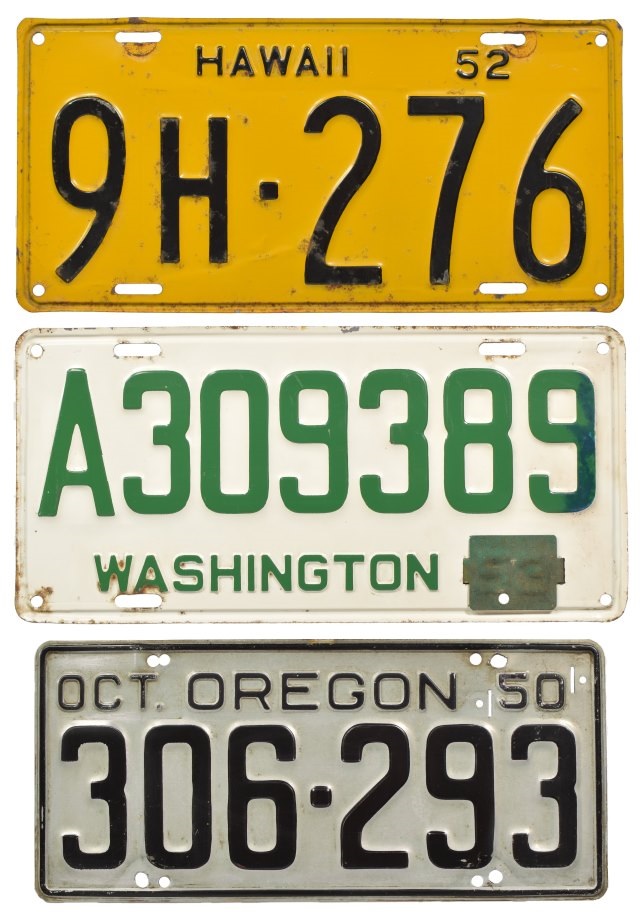
The result was an odd contrast to what had been on the roads in Washington for three years. The Screw Machine product was taller, narrower, and had more angular numbers than Washington’s normal plates. These did not have a stamped date, just a blank space with slots for the 1953 tabs (the penitentiary had still been stamping Washington plates with a “51” date as that was the last year that dated plates had been used; all would have been immediately covered by a ’53 tab when issued).
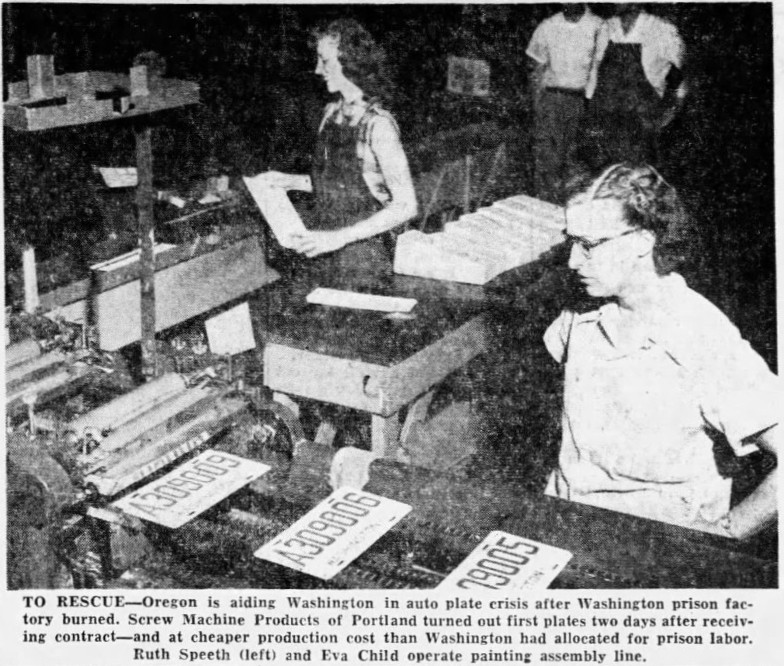
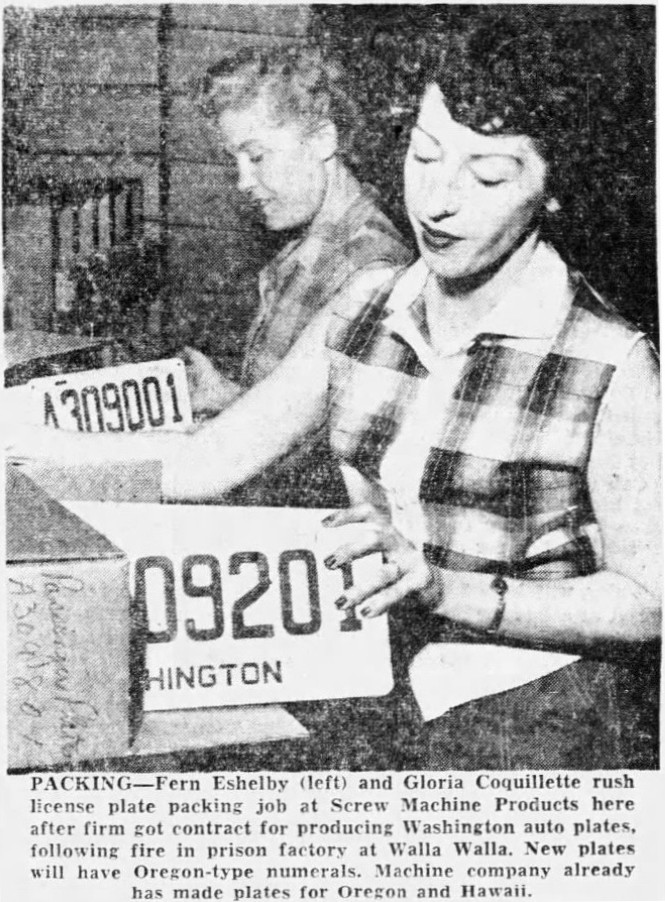
These license plates are rare; they were only made as needed for specific counties if their onhand inventory was depleted, and were generally only on vehicles for three months or less before the 1954 license plates were issued.
1954: Lucky Survivors
Most of the state’s 1954 license plates were destroyed in the fire. However, a few lucky counties had already received their plates. Pierce, Spokane, and Columbia Counties had all received their shipments early, and small batches of centrally-issued non-passenger vehicle plates had made it to Department of Licensing headquarters in Olympia.
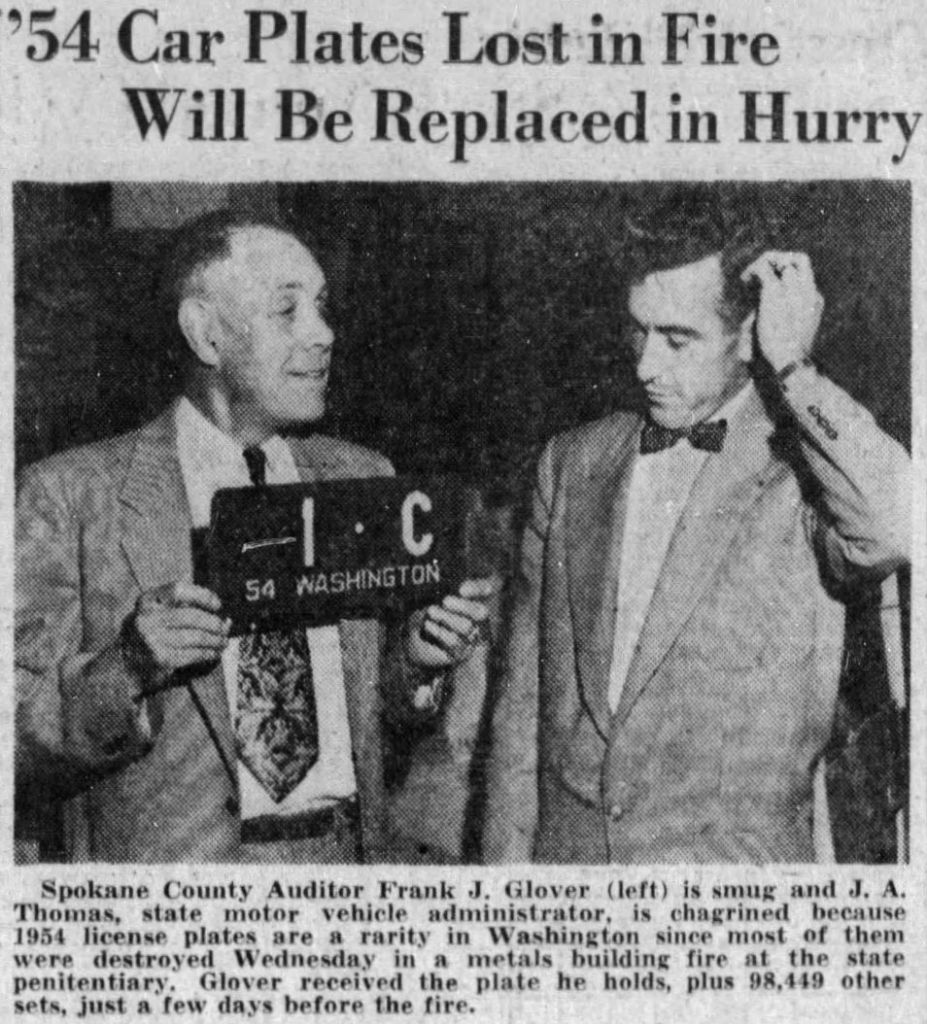
“Spokane County Auditor Frank Glover said today that this county received virtually all its 1954 vehicle license plates in August. Provision was made to take early delivery to help prison officials who said storage space at the prison was crowded,” the Spokane Chronicle noted on September 10. The article additionally stated that Spokane County had 75,000 passenger car plates, 16,200 truck plates, and 6,000 trailer plates.
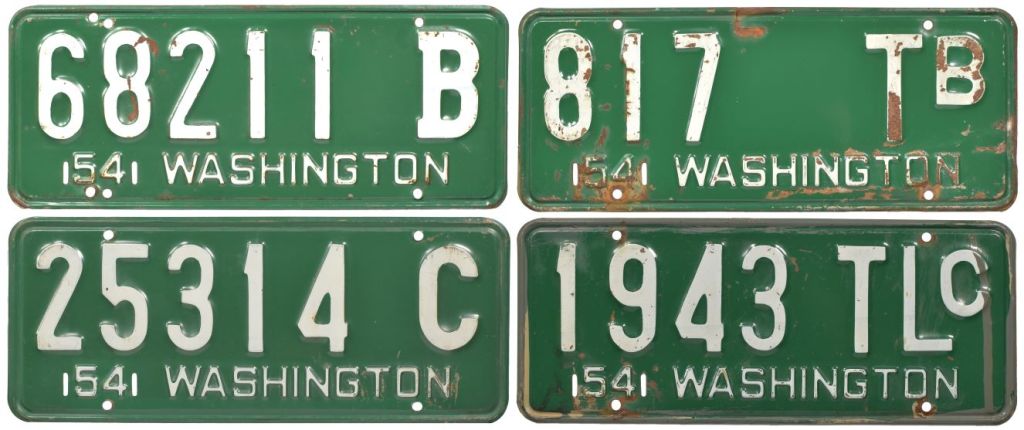
When January came, vehicles in Pierce, Spokane, and Columbia counties had steel, prison-made license plates on their back bumpers (and only their back bumpers: in a departure from what had been standard practice, the 1954 issue was originally single plates, not pairs, a controversial decision that was reversed a year later). Everywhere else, motorists were receiving slightly smaller aluminum license plates shipped from Oregon.
New 1954 License Plates
While a few county auditors were secure in their supply of license plates, the vast majority of Washington’s 1954 licenses had to be completely remanufactured by Screw Machine.
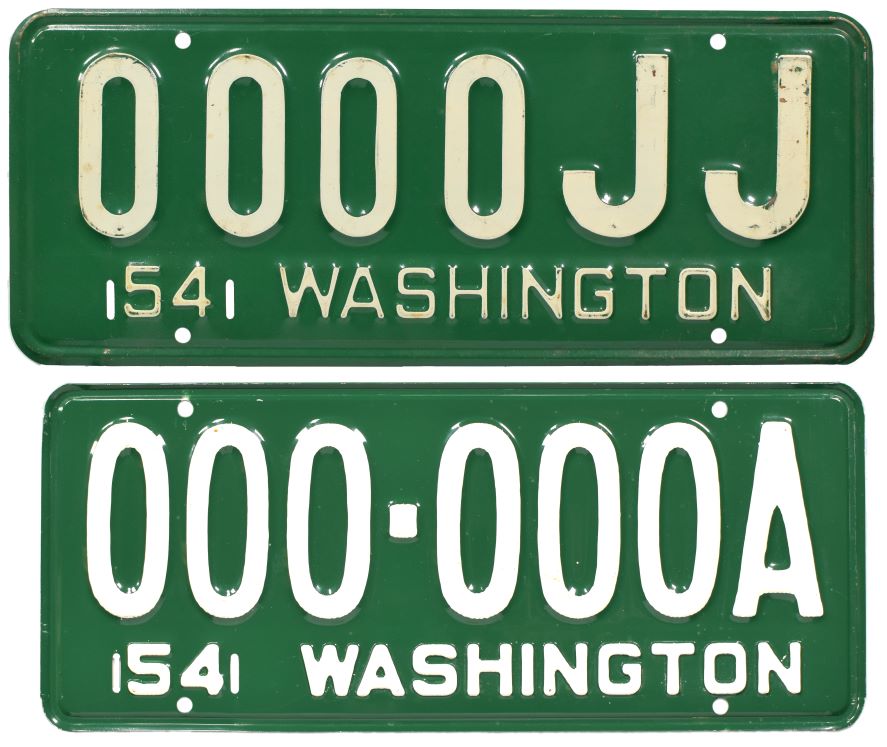
Screw Machine’s design for the 1954 issue generally followed what had been produced in Walla Walla, but were smaller and made of aluminum, instead of steel. Generally, they were well made, and held up fairly well over time, in contrast to the steel Walla Walla plates, which had fragile, flaky green paint.
The 1954 license plates were designed from the start to last multiple years via renewal with metal tabs. Screw Machine continued to manufacture 1954-dated baseplates for Washington through 1957.
Return to Production
By the following spring, some production had resumed in the metals plant. The Tri-City Herald reported in May 1954 that Quonset huts were acquired as temporary facilities for the highway and street sign shop, which would be operational within two months.
But it would take four years for the penitentiary to resume license plate production, with a rebuilt building and new equipment inaugurated for the 1958 issue. And not a moment too soon, either, with Screw Machine out of business.
Restoration of license plate operations at Walla Walla began in earnest in March 1957, when the legislature passed a bill appropriating $75,000 to purchase new machinery.
Production began in mid-October, with Washington’s all-new 1958 baseplate. By January 1958, the restored facility had produced its two-millionth license plate (Walla Walla Union-Bulletin, January 12, 1958).

The Walla Walla Penitentiary has continued to manufacture Washington’s license plates ever since.
The Cause
Official investigations into the fire determined that it was deliberately set, but did not appear linked to an escape plot.
It was not, as sometimes reported, the result of a prison riot. There was indeed a prison riot on the evening of September 9, 1953, but it came after the fire: the blaze also resulted in a power outage that disabled the air conditioning system, causing unrest due to the uncomfortable situation.
Photos and Information Wanted
I am always looking for additional information or photos about license plate manufacturing at the Washington State Penitentiary in Walla Walla. Anything to share? Please contact me – I’d love to chat!
 Danny's License Plates